
Sustainability · Ethics · Heritage
A slow-growing plant, a living heritage, a responsibility. Why sustainability matters when we speak of Iboga, and how Gabon protects its own.
In brief
Iboga (Tabernanthe iboga) is a shrub of the Gabonese forest, designated a national treasure of Gabon in 2000. Its slow growth, seven to ten years to reach maturity, combined with rising global demand for ibogaine, makes unregulated wild harvesting unsustainable and fuels documented poaching. For twenty years Gabon has responded with a sovereign protective framework: heritage listing, ratification of the Nagoya Protocol, a suspension of exports, and a recent measure establishing Iboga as a strategic national heritage. Ebando holds its practice in this same spirit: respectful initiatory transmission, a refusal of commodification, and a firm grounding in Gabon.
- 7 to 10 years
- the time the tree takes to reach maturity (Chacruna Institute).
- 2000
- the year Iboga was designated a national treasure of Gabon.
- 1st in the world
- Gabon, the first country to ratify the Nagoya Protocol, in 2011.
A slow-growing plant
Why does sustainability matter when we speak of Iboga?
Because Iboga is a slow-growing plant. According to the Chacruna Institute, the tree takes seven to ten years to reach maturity, and must be at least five years old before any harvest. When you take the root bark, you take a decade of forest with it.
As long as its use remains that of the Congo Basin communities, within the ritual setting for which it has existed for generations, the balance holds. The imbalance comes from elsewhere: from the global rise of ibogaine, the alkaloid isolated from Iboga, studied as a possible path against addiction. This external demand, combined with the plant's slow growth, turns a living resource into a target for intensive harvesting.
This is where sustainability and ethics meet. It is not only an ecological question: it is a question of respect for a heritage and for the communities who are its guardians.
The status of the species
Is Iboga an endangered species?
Officially, no, not by international criteria, but the status deserves to be read with caution.
[FACT] The International Union for Conservation of Nature (IUCN) lists Tabernanthe iboga as « Least Concern », that is, not as a threatened species.
[NUANCE] This status rests on a presumed wide geographic range. Yet it coexists with the absence of any national inventory of wild populations in Gabon: no field count confirms the actual state of the resource. To date, we have no reliable demographic data on the wild populations (sources: IUCN, Wikipedia, little data available).
A documented reality
What is Iboga poaching?
It is a documented reality, not an abstract fear.
According to an investigation by National Geographic (Tharoor, 2019), most of the Iboga and ibogaine used by Western clinics comes from plants poached in Gabon and smuggled out of the country through Cameroon. The local price of Iboga rose by roughly 800% over a decade. In December 2018, a seizure of about 2,000 pounds (nearly 90 bags) took place in Mayumba; in 2011-2012, twenty iboga-related arrests and the seizure of 88 bags of roots were recorded (two separate episodes).
This poaching strips the Bwiti communities of their resource and their rights, for the benefit of an outside market. It is the exact opposite of a respectful transmission.
An Iboga torn from the forest with no framework, no community, no consent has nothing to do with the Iboga received within a rite. Provenance is part of respect.
— Ebando's reading
A sovereignty built over twenty years
How does Gabon protect Iboga?
Over more than twenty years, Gabon has built a framework of sovereignty over this resource. Here are the verified milestones.
National treasure
By decree of the Council of Ministers in 2000, Iboga (Tabernanthe iboga) was designated a national treasure of Gabon; its cultivation, transmission and ritual use are protected.
First Nagoya country
The Nagoya Protocol (on access to genetic resources and the fair sharing of benefits, attached to the Convention on Biological Diversity) was adopted on 29 October 2010 and entered into force on 12 October 2014. Gabon was the first country in the world to ratify it, in November 2011.
Export suspension
In 2019, Gabon suspended the export of Iboga as a precautionary measure (decree of 4 February 2019). Only Iboga that is cultivated and compliant with the Nagoya Protocol may be exported, under authorisation.
Strategic national heritage
On 30 April 2026, the Council of Ministers adopted a draft decree governing the entire Iboga sector: activities subject to prior authorisation, benefit-sharing with the communities, an “Iboga Sovereign Fund”. Draft adopted in the Council of Ministers; implementing rules still to be specified, framework still evolving.
Different from one country to another
Legal status of Iboga
The legal status of Iboga varies significantly from one country to another, important to be aware of before planning any trip or initiation.
In Gabon, Iboga is recognised as part of the national cultural heritage: the plant and the Bwiti rite are embedded in the country's culture and protected as such.
In France, Tabernanthe iboga and ibogaine (together with their derivatives and preparations) have been classified as narcotics since 2007 (decree of 12 March 2007, published in the Journal officiel on 25 March 2007). Their possession, transfer and use are governed by narcotics regulations.
The distinction that changes everything
Iboga or ibogaine?
It is the most common confusion, and it matters legally as much as ethically.
Iboga is the plant, Gabon's living heritage. In Gabon, regulation concerns access to the resource, its commercial exploitation and its export, within a logic of protecting the heritage and the communities.
Ibogaine is the alkaloid isolated from the plant, studied for medical use. Its legal status varies sharply from one country to another. The strictest and most stable framework is that of the United States, where ibogaine is classified as Schedule I under the Controlled Substances Act.
A useful nuance on conservation: an alternative route exists for pharmaceutical ibogaine, semi-synthesis from Voacanga africana, a far more abundant species (source: Chacruna). It can ease the pressure on Iboga on the medical-market side, but it does not replace the sacred Iboga of the rite, which is culturally irreplaceable in Bwiti.
The opposite of poaching exists
What does an ethical supply chain look like?
The opposite of poaching exists, and it has a concrete precedent.
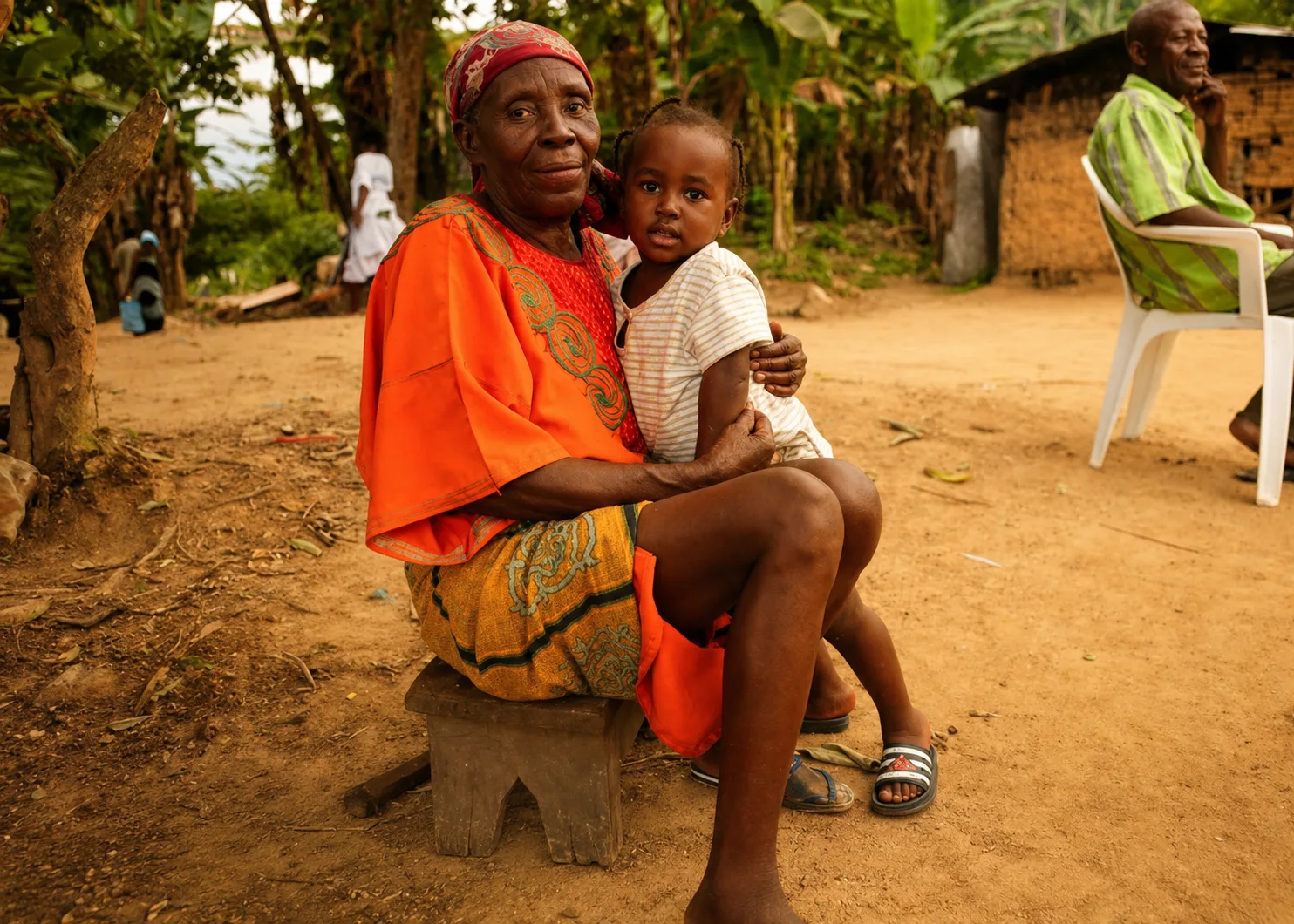
[FACT] The first export of Iboga compliant with the Nagoya Protocol took place on 17 May 2023: one kilo of root, in the presence of the A2E community, the NGO Blessings of the Forest and the Gabonese Ministry of Water and Forests, bound for Canada.
What sets this shipment apart from poaching is not the Iboga itself, it is the framework: sustainable cultivation rather than wild harvesting, the consent and participation of the communities, and a sharing of benefits, the opposite of a tree torn out and resold on the other side of the world.
Alongside Ebando
Work that is never done alone
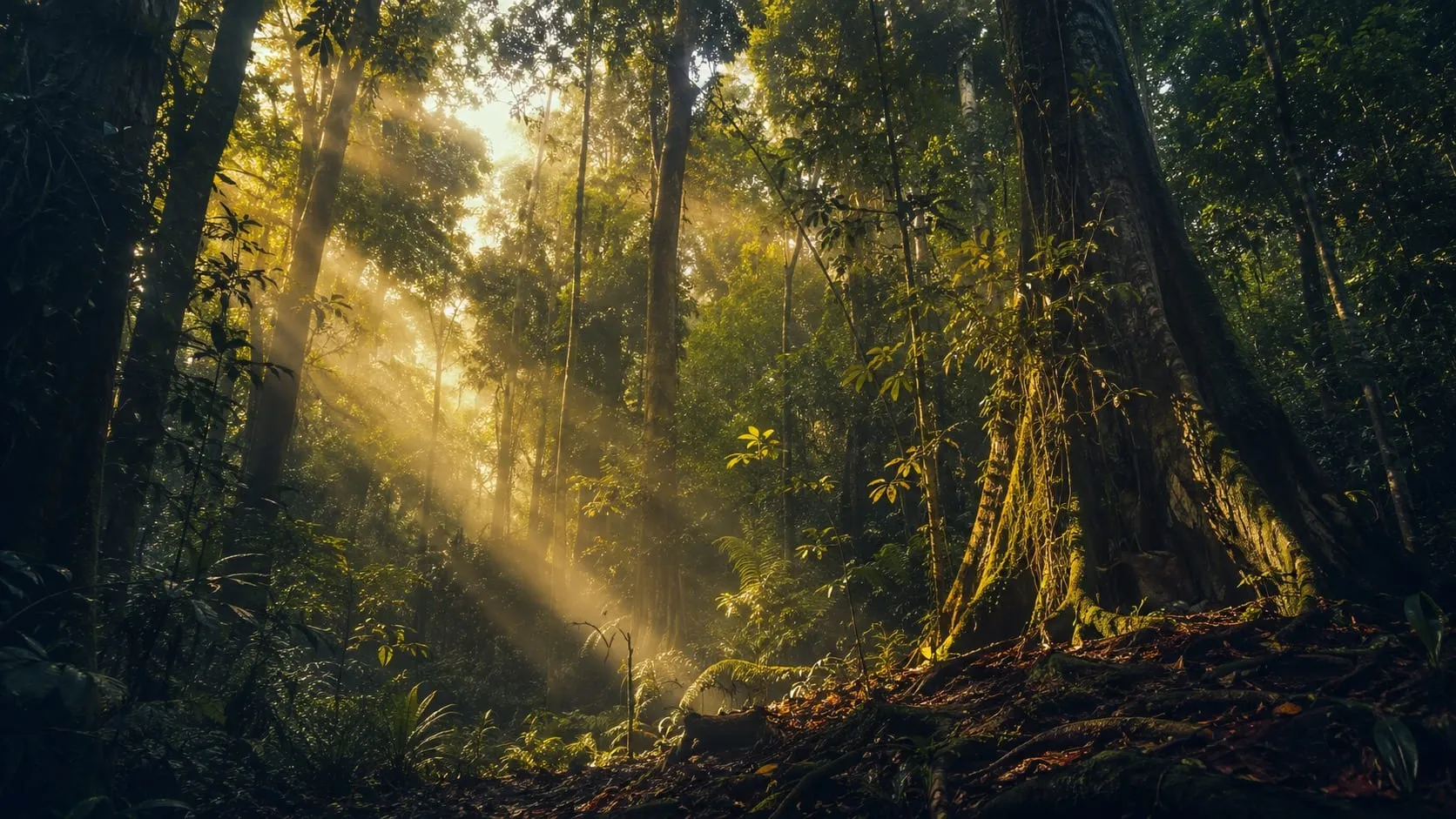
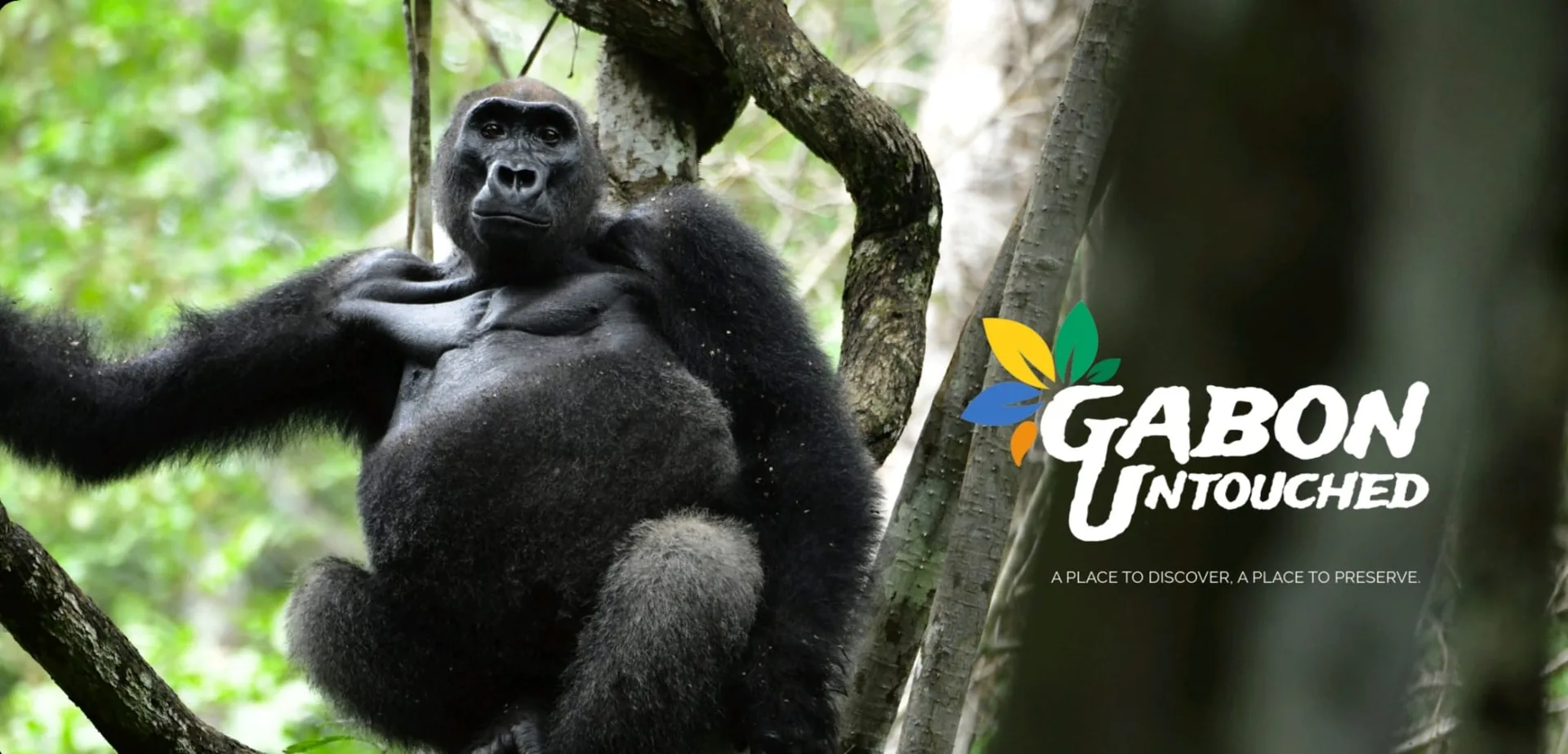
Ebando moves forward with associations that protect Gabon's forest, Iboga and communities.
Our place in all this
What Ebando does
Ebando is a registered Gabonese NGO, based in Libreville, dedicated to the transmission of Bwiti and Iboga. Founded on 30 September 1999 under the name ANCE, Association Nature Culture Ebando (BP 1122, Akanda), it grounds its relationship to sustainability and ethics in a few core principles.
Transmission, not a plant trade
Our purpose is initiatory transmission within a structured ritual setting, inherited from the Gabonese communities. Iboga is not a product to be sold, it is a heritage to be received and respected.
A refusal of commodification and poaching
We keep clear of any logic of extractive exploitation of Iboga. A living heritage is not to be treated as a commodity.
An openly Gabonese grounding
Iboga is Gabonese, Bwiti is Gabonese. We place our practice within that legitimacy and in the spirit of the protective framework Gabon has been building for twenty years.
Going further
And what does the research say?
This page deals with the heritage, the law and the conservation of Iboga, the plant. To understand what research says today about Iboga and ibogaine, their effects, clinical avenues and documented medical risks, see our dedicated page.
What the research says