Days 1 — 3
Preparation
Arrival in Libreville, acclimatisation to the climate and the place, connection with the team and the other participants, rest. Time changes its rhythm.

Iboga initiation · Bwiti · Gabon
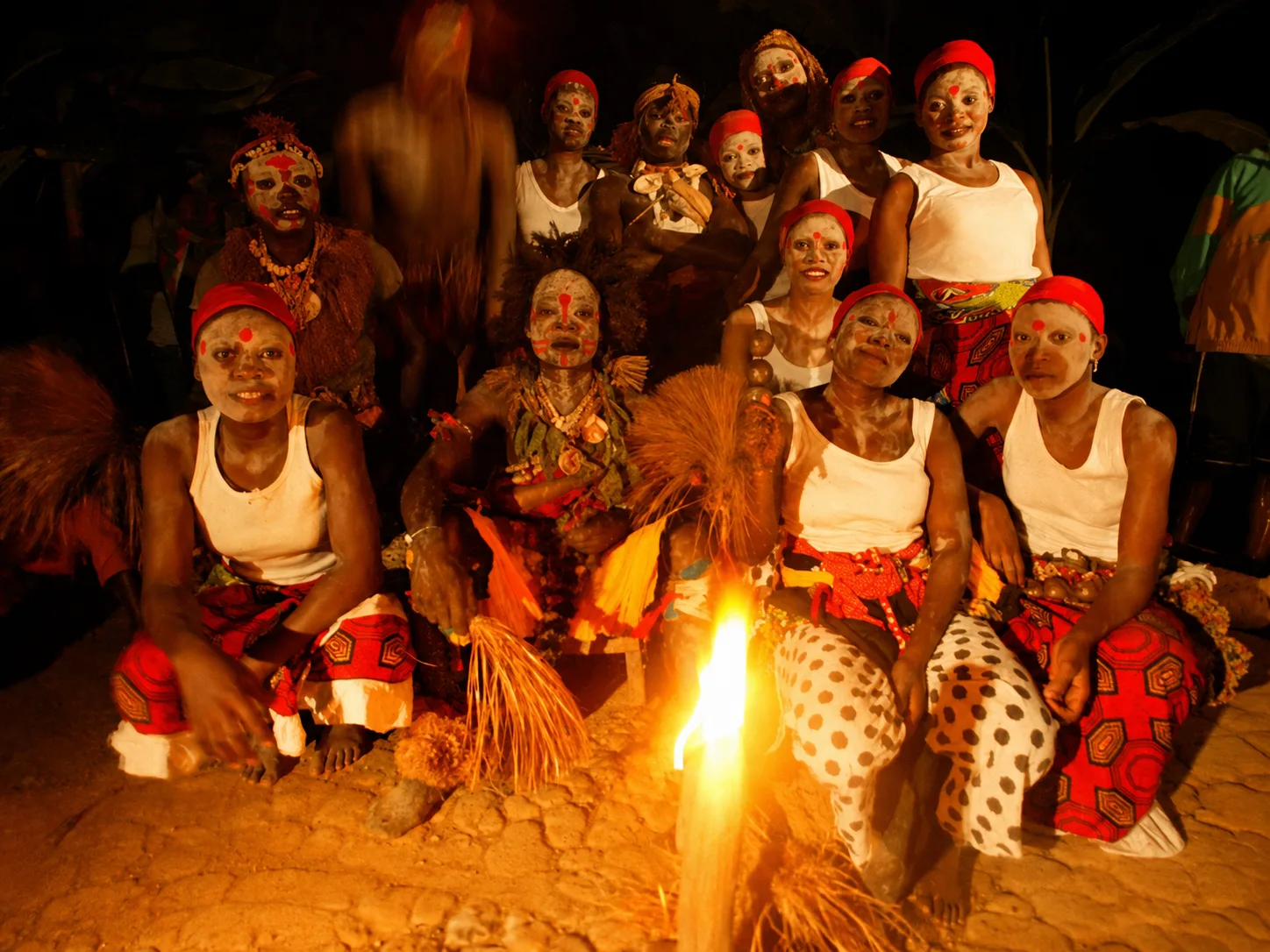
You rarely come out of simple curiosity. You often come at the end of an emptiness, a dependency, a wound that nothing has untied. Here, you are welcomed as a patient guest: an Iboga-Bwiti initiation is not an experience to consume, it is a structured passage, within a living tradition, accompanied by the crew. For many, it was a real turning point.
Understand
Iboga (Tabernanthe iboga), also called the Sacred Wood, is the initiatory vehicle of the Bwiti. Tonic effects in small quantities, initiatory realisations in larger quantities. Used within a healing process, it is an entheogenic plant — and it is not addictive in itself at all.
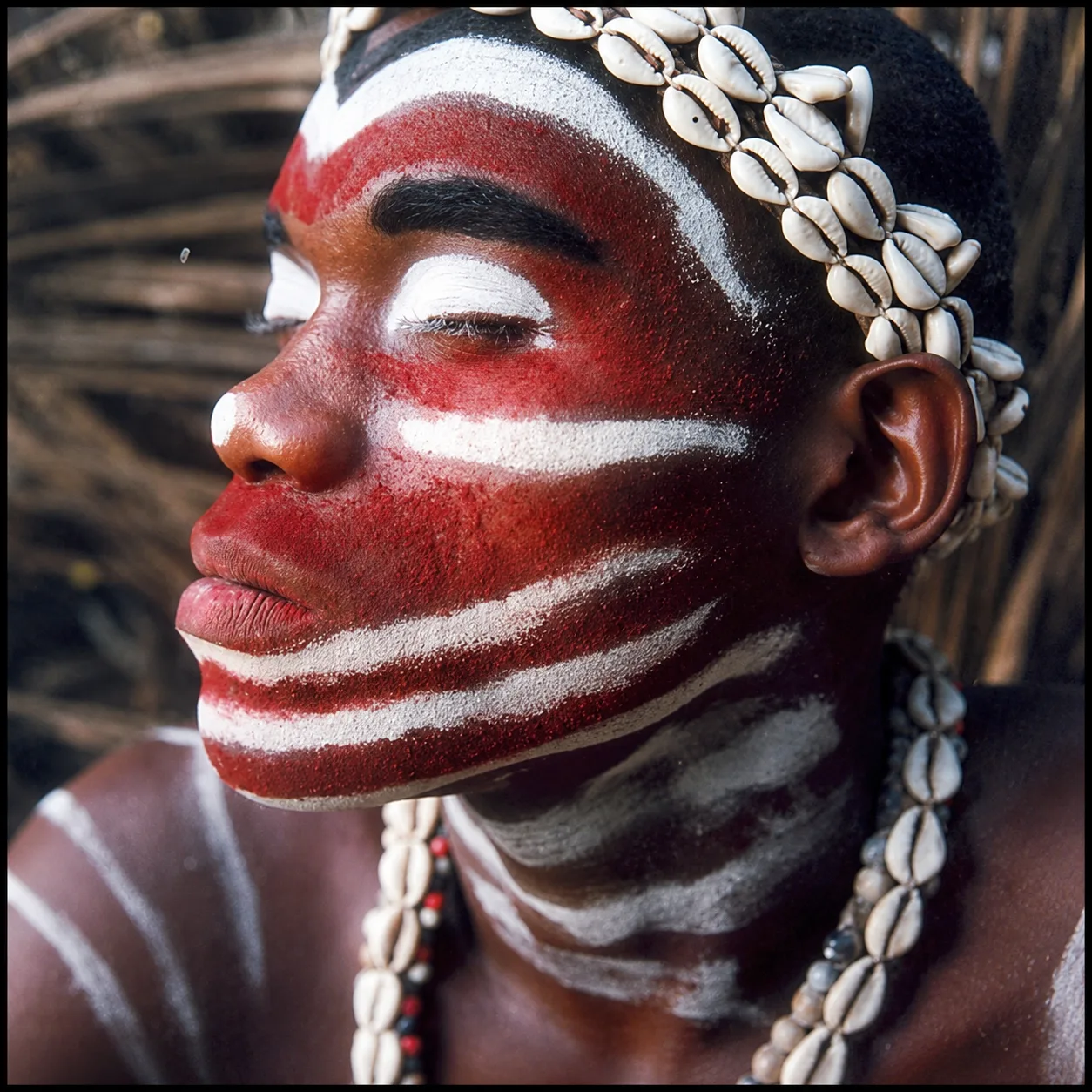
The Bwiti stands as one of the most important esoteric traditions of Gabon. The first to experience the power of Iboga were the forest's first peoples; its ritualised practice, blended with the cult of the Ancestors, gave rise to the Bwiti, at the heart of the equatorial forest.
Is this a path for you?
People rarely come empty-handed. An emptiness, a dependency, an old wound. The path stays the same, but it is told differently depending on what you carry.
Is it for me?
Ebando is one of the places of transmission of the Bwiti and Iboga in Gabon. We transmit a tradition. The path and the healing belong to the one who comes. A place of transmission, not a spiritual retreat. No individual initiation — we recommend a group stay.
The course
The stay lasts twelve days, set by Ebando for each session. The journey begins before the ceremony, in the very decision to come.
Days 1 — 3
Arrival in Libreville, acclimatisation to the climate and the place, connection with the team and the other participants, rest. Time changes its rhythm.
Days 4 — 6
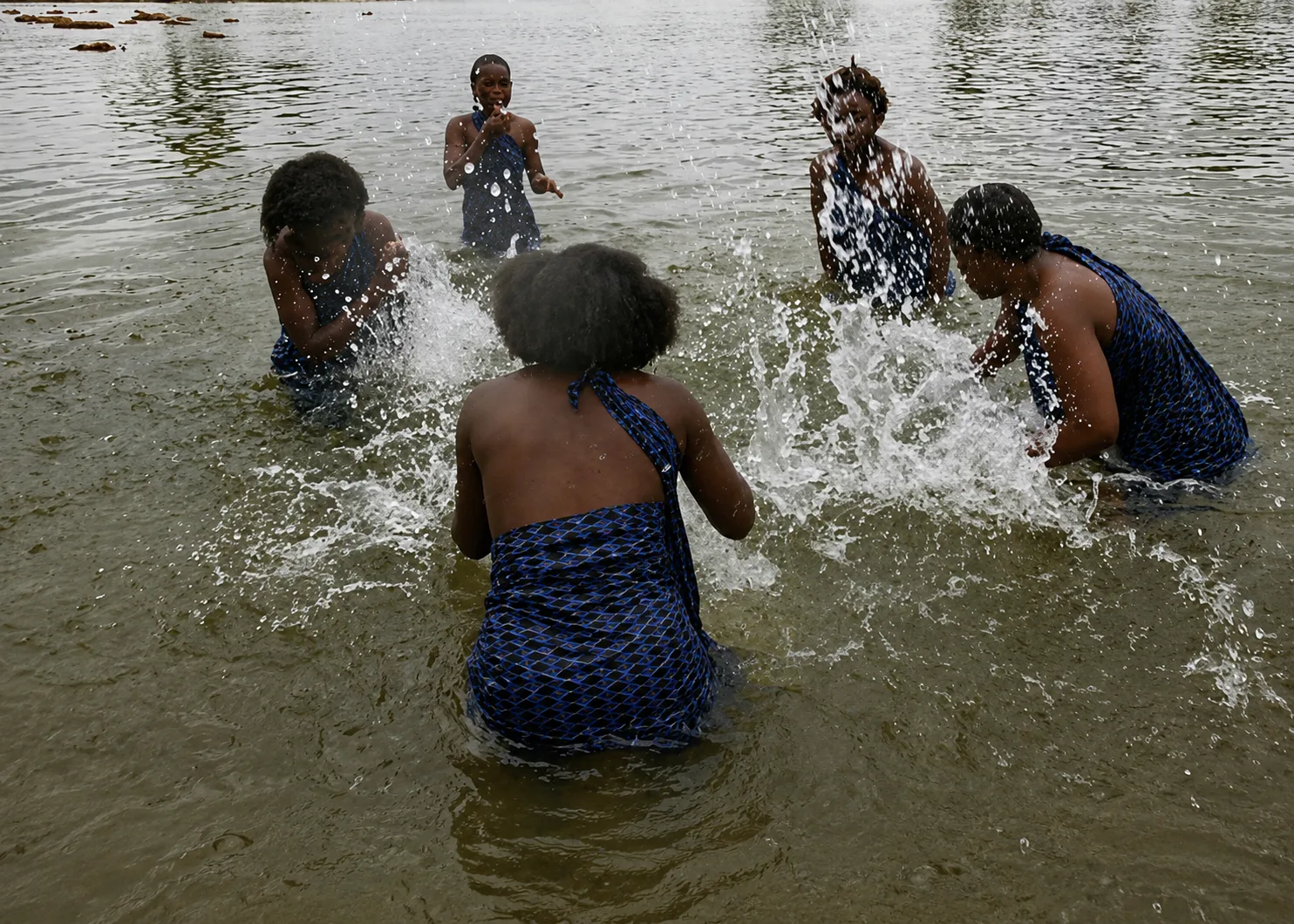
Blessing in the forest, ritual plant baths of purification, then the main ceremony: it begins in the evening and lasts all night.
Days 7 — 8+
The body slowly surrenders to sleep and deep rest. When recovery allows, the final ceremony opens the blessings of the return.
The return, and after
Leaving Ebando is not the end of the journey: it is the beginning of a longer, quieter phase. The team remains available.
“The more you can surrender to the process, the more you support your own journey.”
After
Leaving Ebando does not end at departure. Integration begins on your return and lasts several months. Nothing is rushed: the work continues in depth, gently.
“We read. We answer.”
Featured in











Recommended by




What the research says
Here is the current state of knowledge, with each statement sorted by its level of evidence and given its source. What is an established fact, what remains a line of research, what belongs to reported lived experience: we do not blur the registers.
Iboga (Tabernanthe iboga) is a shrub of the forests of Gabon and northern Congo. The main alkaloid of its root bark is ibogaine, used traditionally in initiation rites, including those of the Bwiti.
Source
Tabernanthe iboga, Wikipedia (sourced ethnobotanical synthesis)
View the source (opens in a new tab)Prof. Jean-Noël Gassita, a Gabonese pharmacologist and founder of the Institute of Pharmacopoeia and Traditional Medicine (IPHAMETRA), is recognised as a world specialist of Iboga and ibogaine, and the first Black laureate of the Academy of Medicine of Paris.
In a series of clinical observations, ibogaine has been associated with a reduction in craving and opioid withdrawal symptoms after a single dose. The authors stress that these data remain drawn from observations and preclinical models, and call for controlled trials.
Source
Mash et al., "Ibogaine Detoxification Transitions Opioid and Cocaine Abusers…", Frontiers in Pharmacology, 2018
View the source (opens in a new tab)An observational study with twelve-month follow-up reported, in people dependent on opioids, a reduction in use after ibogaine treatment. The observational design (with no control group) limits the scope of the conclusions.
Source
Noller, Frampton & Yazar-Klosinski, "Ibogaine treatment outcomes for opioid dependence from a twelve-month follow-up observational study", Am J Drug Alcohol Abuse, 2018
View the source (opens in a new tab)ICEERS is conducting in Spain (Hospital Sant Joan de Reus) the first phase II clinical trial evaluating the efficacy and safety of ibogaine for opioid dependence and methadone withdrawal, following an ascending low-dose protocol.
A Stanford University study published in Nature Medicine (2024) on 30 special-forces veterans with mild traumatic brain injury reported, one month after an ibogaine + magnesium therapy, reductions in post-traumatic stress, depression and anxiety symptoms, with no severe cardiac effect observed. The study was neither randomised nor controlled, on a small sample, and calls for replications.
Source
Cherian et al., "Magnesium–ibogaine therapy in veterans with traumatic brain injuries", Nature Medicine, 2024
View the source (opens in a new tab)Ibogaine and its metabolite noribogaine block the heart's hERG potassium channels, which lengthens the QT interval on the electrocardiogram and creates a risk of ventricular arrhythmia (torsades de pointes) in predisposed individuals. This is the main documented medical risk.
Source
Koenig & Hilber, "The Anti-Addiction Drug Ibogaine and the Heart: A Delicate Relation", Molecules / PMC, 2015
View the source (opens in a new tab)A severe lengthening of the QT interval after ibogaine intake has been described in the medical literature (induced long-QT syndrome), which justifies prior cardiac screening and an ECG, then continuous cardiac monitoring.
Source
Hoelen, Spuls & den Brink, "Long-QT Syndrome Induced by the Antiaddiction Drug Ibogaine", New England Journal of Medicine, 2009
View the source (opens in a new tab)Ibogaine is described as an "oneirogenic" substance: it induces states close to waking dreams, experienced mainly internally (introspective visions, autobiographical memory), distinct from the open-eye visual hallucinations of other classic psychedelics.
Two medicines
Far from opposing each other, Iboga and ayahuasca are often experienced as complementary, two medicines, two paths that answer one another.
Iboga
The masculine
the father, structure, verticality, the confrontation with one's own truth.
Ayahuasca
The feminine
the mother, water, emotion, letting go, gentleness.
Symbolic reading shared by many practitioners and traditions, a felt sense, not a scientific claim.
| Aspect | Iboga | Ayahuasca |
|---|---|---|
| Plant & main alkaloid | Tabernanthe iboga, root bark; main indole alkaloid: ibogaine. | Decoction of Banisteriopsis caapi (beta-carbolines, MAOIs) + Psychotria viridis; visionary principle: DMT. |
| Origin & tradition | Central Africa (Gabon, Cameroon, Congo). Heart of the Bwiti initiation rites. | Western Amazon basin. Shamanic and religious use, with documented spread mainly recent (last few centuries). |
| Ceremony format | Most often a single, long initiatory intake, over one night (and beyond). | Several sessions of a few hours each, often spread over several nights. |
| Duration of effects | Long experience: about 18 to 36 hours, in successive phases (visionary, introspective, residual). | Short experience: about 4 to 8 hours, onset in 20 to 60 minutes, peak around the 1st–2nd hour. |
| Nature of the experience | "Oneirogenic" state (waking dream), visions mainly internal, introspective and autobiographical. | Visions often with eyes open/closed, frequent purgative dimension (ritual vomiting). |
| Cardiac monitoring | Prior ECG and cardiac assessment required: ibogaine lengthens the QT interval (risk of arrhythmia). | No documented QT risk of its own; main vigilance on MAOI interactions (medications, foods). |
| Cultural purpose | Initiation rite: passage, meeting with the ancestors, search for truth about oneself. | Healing, purge, vision and guidance within an Amazonian shamanic framework. |
Plant & main alkaloid
Origin & tradition
Ceremony format
Duration of effects
Nature of the experience
Cardiac monitoring
Cultural purpose
Questions fréquentes
Health-related answers are for information only and do not constitute medical advice: Ebando is not a medical team, and a prior medical assessment remains required.
To go further
Leave, anew.
The first step is a message. The Ebando team answers itself, in French and in English, without a script and without automation. We take the time to get to know you before any visit.
How to begin
Nine steps. A clear road.
Allow 2 to 4 months between your first message and your arrival. An initiation is not rushed — the very opposite of a checkout funnel.
First contact
Day 1A WhatsApp message to Tatayo (French and English), or an email to OngEbando@gmail.com. A human from the team answers you.
Phone conversation
Week 1A call with the team: this is not a sales interview. You share what brings you, the team listens. An initiation is prepared together.
Pre-initiation questionnaire
Week 2 — 3You fill in the questionnaire: physical and mental health, history, relationship with substances. Your data never passes through the site.
Medical preparation
Week 3 — 6Three examinations at a doctor's: ECG, liver panel and blood pressure reading. Not optional: your safety depends on them.
Confirmation and deposit
Medical validatedYour place is confirmed by a non-refundable deposit. The balance is paid in cash on arrival.
Visa and formalities
Week 6 — 10Visa through the partner agency M'bolo Tours: around €220, paid on arrival (detail confirmed by the team). Allow two to four weeks of processing.
Vaccinations and malaria
Week 8 — 11Yellow fever certificate mandatory (otherwise a €40 fine at customs). Malaria: Malarone (or Artemisia annua) on prescription; Lariam (mefloquine) not suitable, ask your travel doctor.
Mental preparation and sobriety
2 weeks beforeFree of medicinal plants, drugs, alcohol, medication (except validated prescription). The safety of the ceremony depends on it.
Arrival at Ebando
The dayYou land in Libreville. Ebando is fifteen minutes away, along the beach. You settle the balance in cash, you set down your bags.