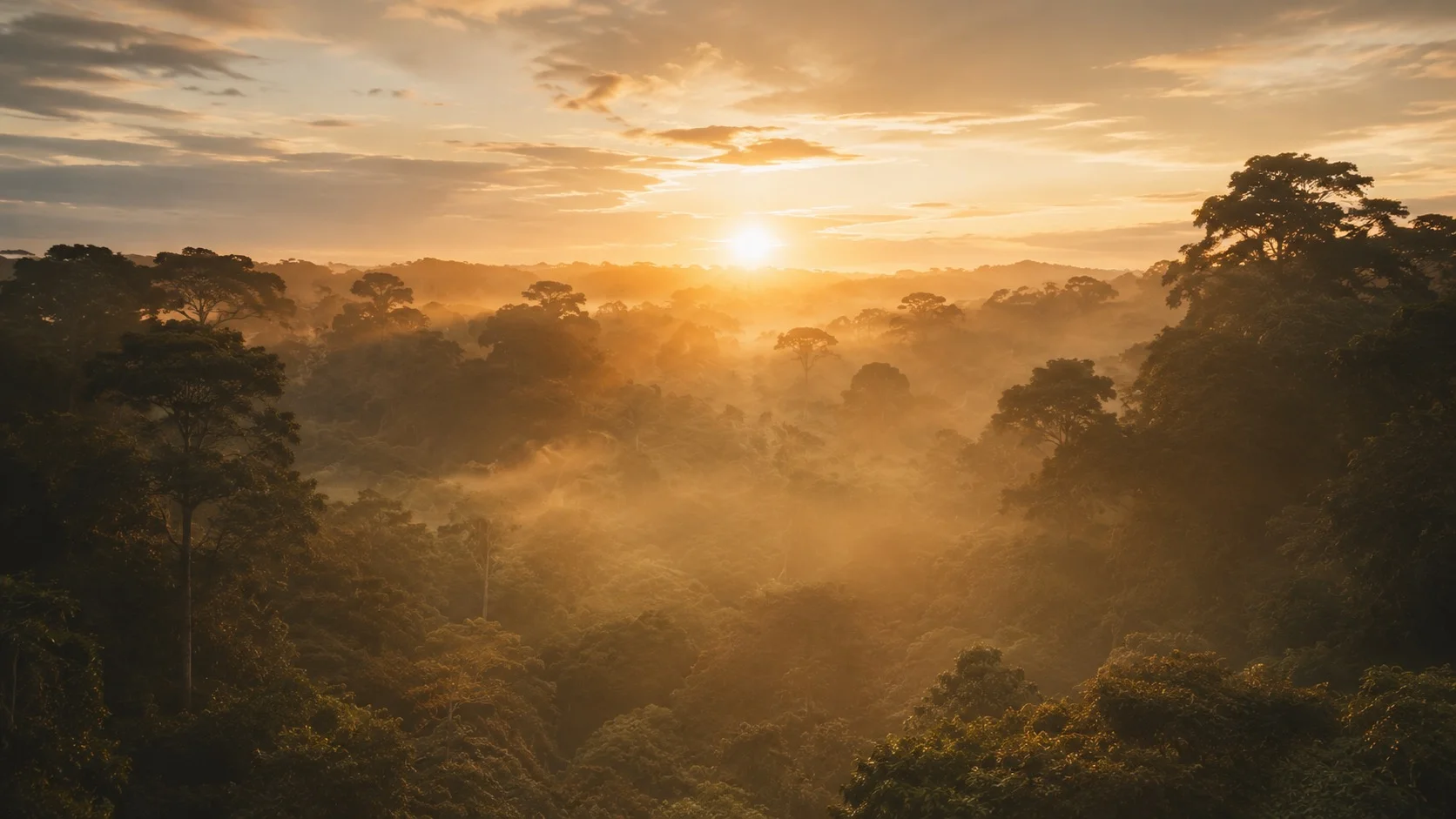
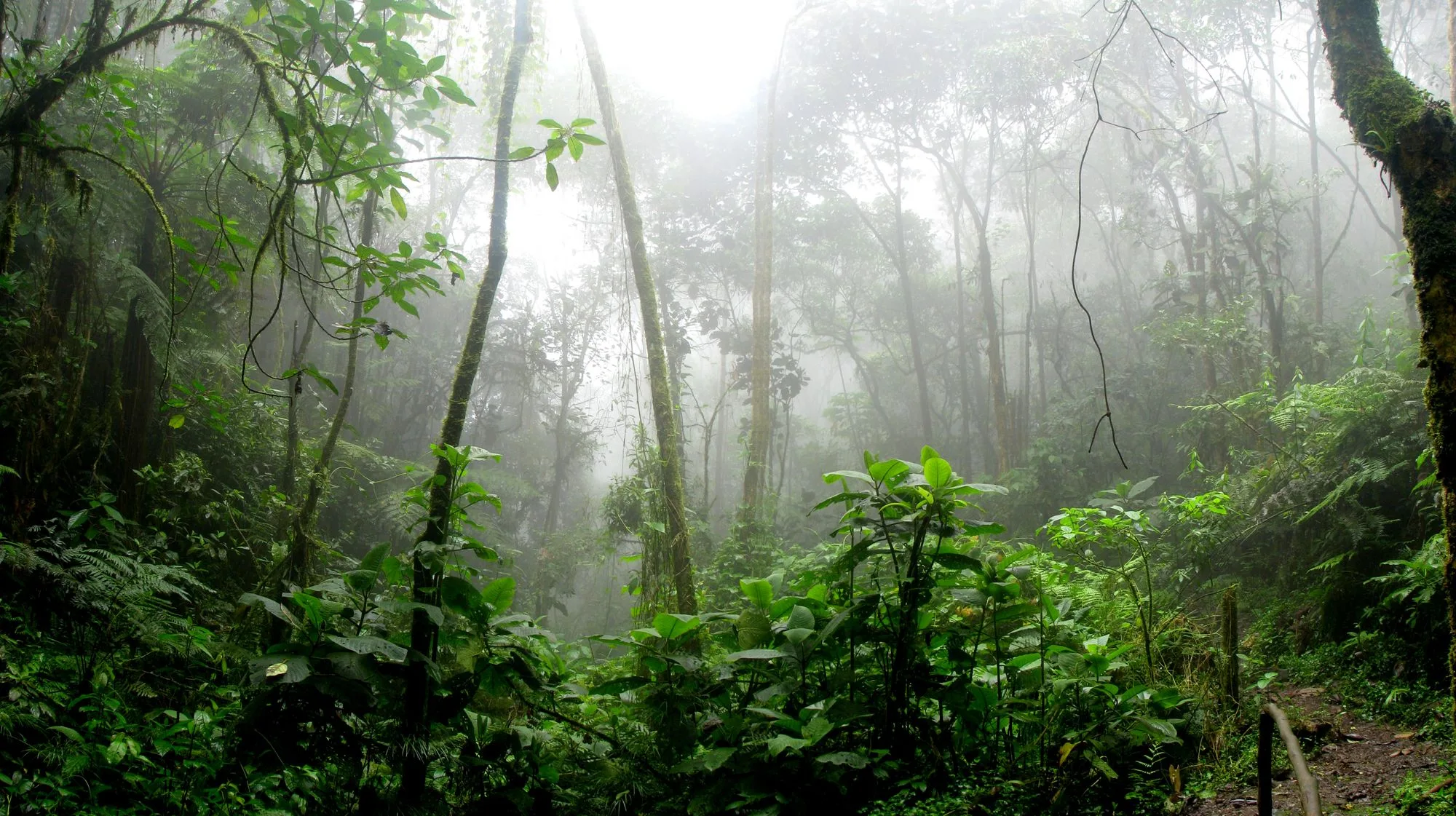
Misty path through the equatorial forest, the road of Ebando's more than fifty years
The association

Our story

More than fifty years between France, Gabon and the forest.

One voice, one path

Ebando was not born of a decision. It was born of an encounter, after a long road. Hugues Obiang Poitevin — the one everyone calls Tatayo — arrives in Gabon on 10 October 1971, at twenty-one, to join his mother. He would settle in Libreville and not leave; he would become a Gabonese citizen much later, in 2005, after thirty-three years of presence and love of the country. Five years after his arrival, on the night of 2 August 1976, near Kango, his car breaks down. He knocks at the only lit door in the area: that of André Ngi Ovono, craftsman, liturgical harpist and great healer initiated into the Bwiti. Twenty-three years after that encounter, on 30 September 1999, at Akanda near Libreville, these two men would found Ebando together. Between the two, it took learning, being received, being initiated — the Bwiti Fang Dissumba in 1979, the Bwiti Akèlè Simba Misoko-Ngondé in 1994 — and passing through, before setting down a name.

The two co-founders

Two men, one encounter.

Ebando was born of the friendship between a child of Gascony who became Gabonese and a great Bwiti healer. One opened his door, the other learned how to enter.

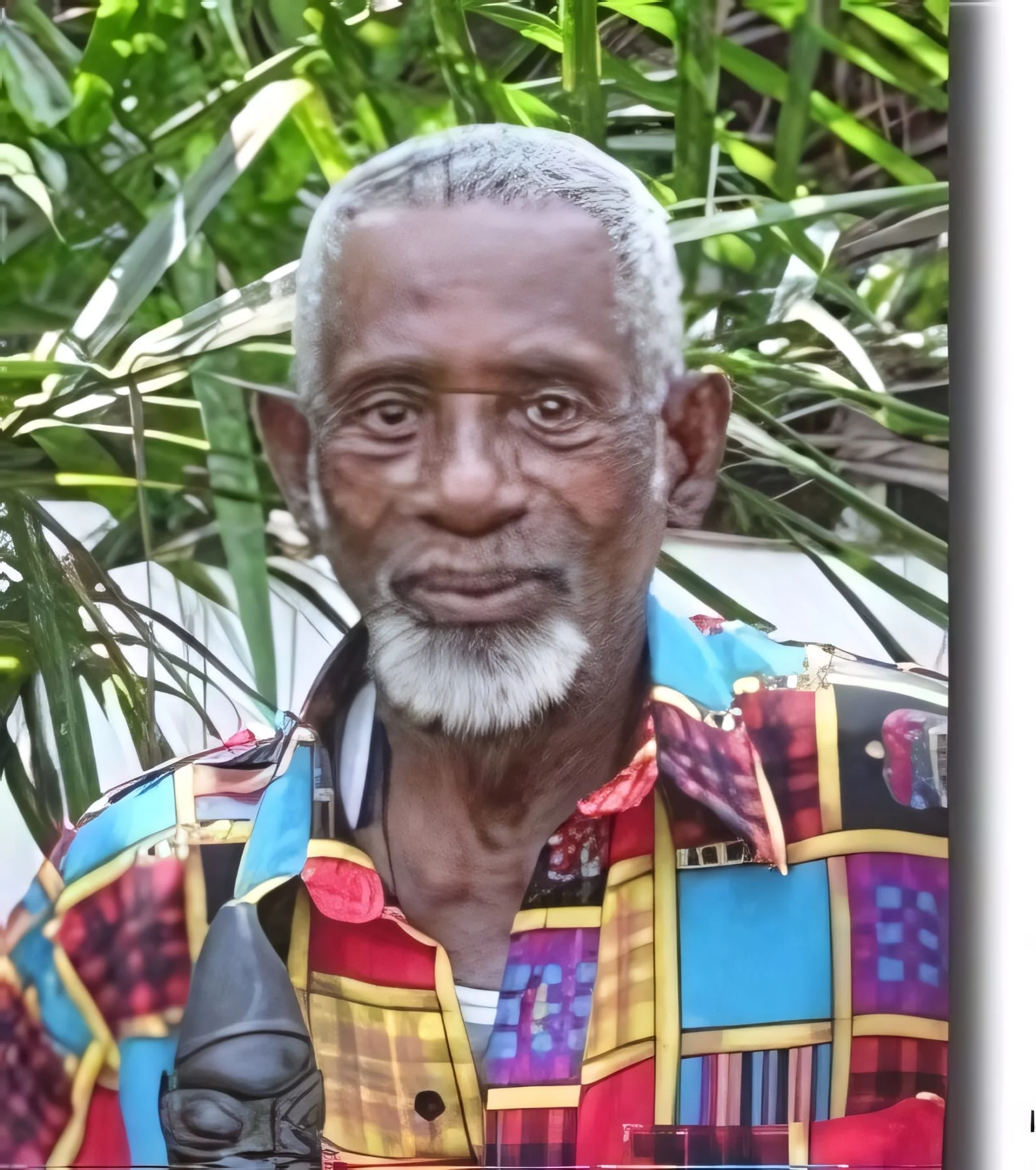
Portrait of Papa André Ngi Ovono, co-founder and honorary president of Ebando
Ebando archive photograph

1934 – 2017 · Honorary president

André Ngi Ovono

“Papa André”

Craftsman, liturgical harpist, great healer initiated into the Bwiti, father and grandfather of fifteen children and grandchildren. It was he who, on the night of 2 August 1976, opened his door to Tatayo. He would remain the guardian and honorary president of Ebando until his passing, on 15 December 2017.

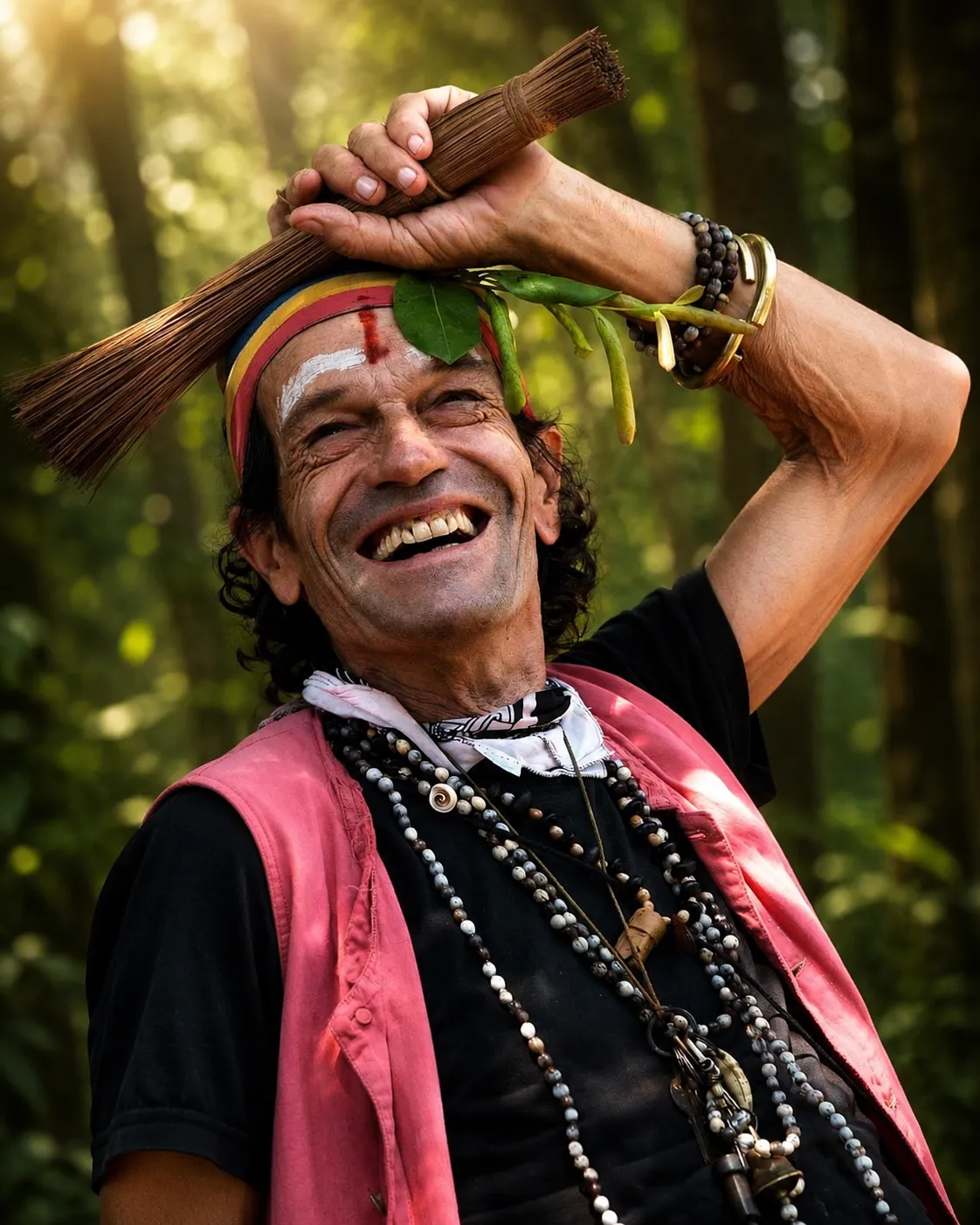
Portrait of Tatayo, Hugues Obiang Poitevin, co-founder of Ebando
Ebando portrait

In Gabon since 1971 · Driving force

Tatayo, “Fruit of the Wind”

Hugues Obiang Poitevin · Obiang Nzondo Mamisoba

Originally from Gascony, having arrived in Gabon on 10 October 1971 at twenty-one and become a Gabonese citizen in 2005, he describes himself as a “cultural métis”. The first Westerner initiated into the Bwiti Fang in 1979, and the third Westerner initiated into the Misoko in 1994. Within Ebando, he is the driving force that holds together the transmission, the officiants and the initiates.

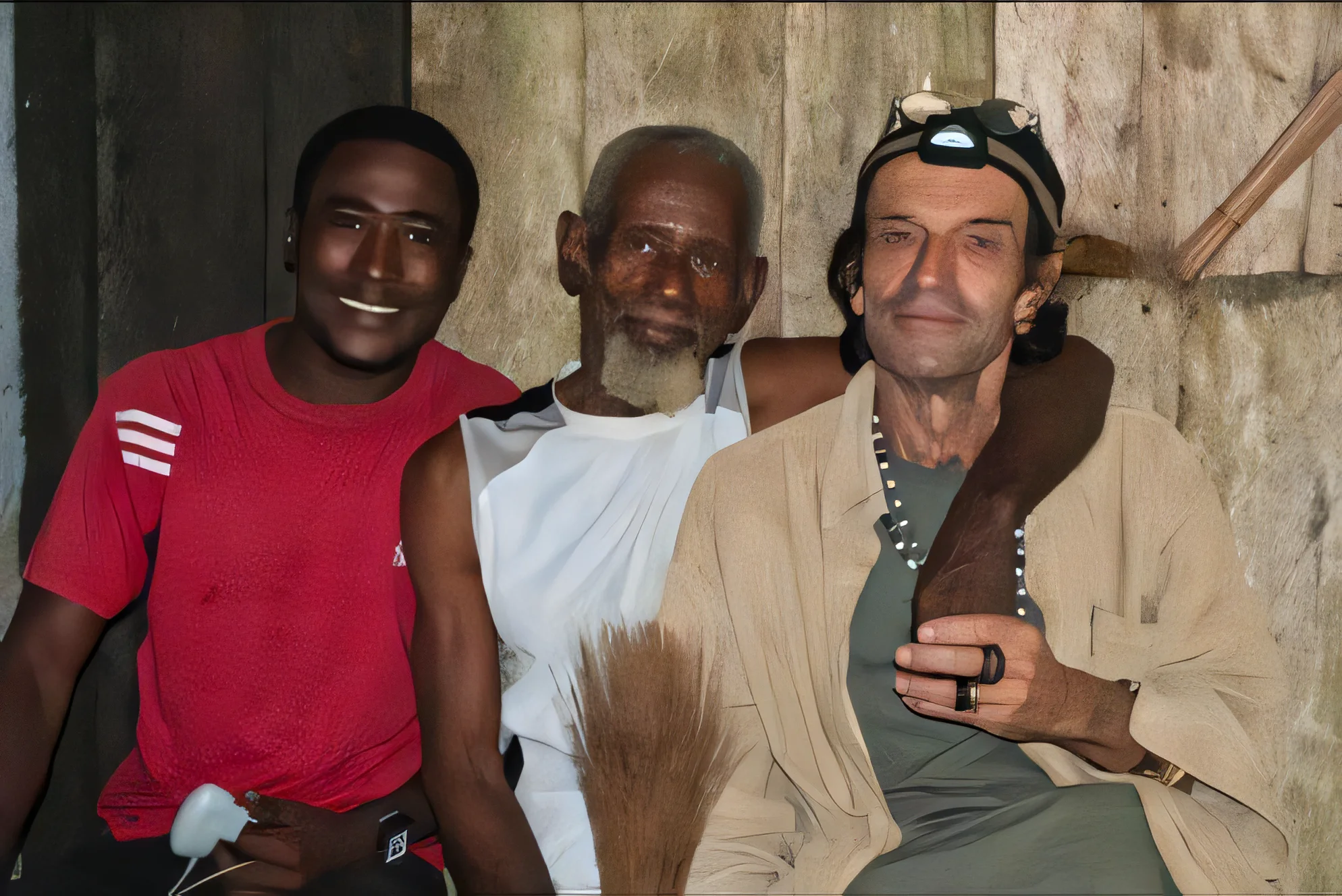
Mbilou, Papa André Ngi Ovono and Tatayo together at the village
Mbilou, Papa André and Tatayo · Ebando archive photo
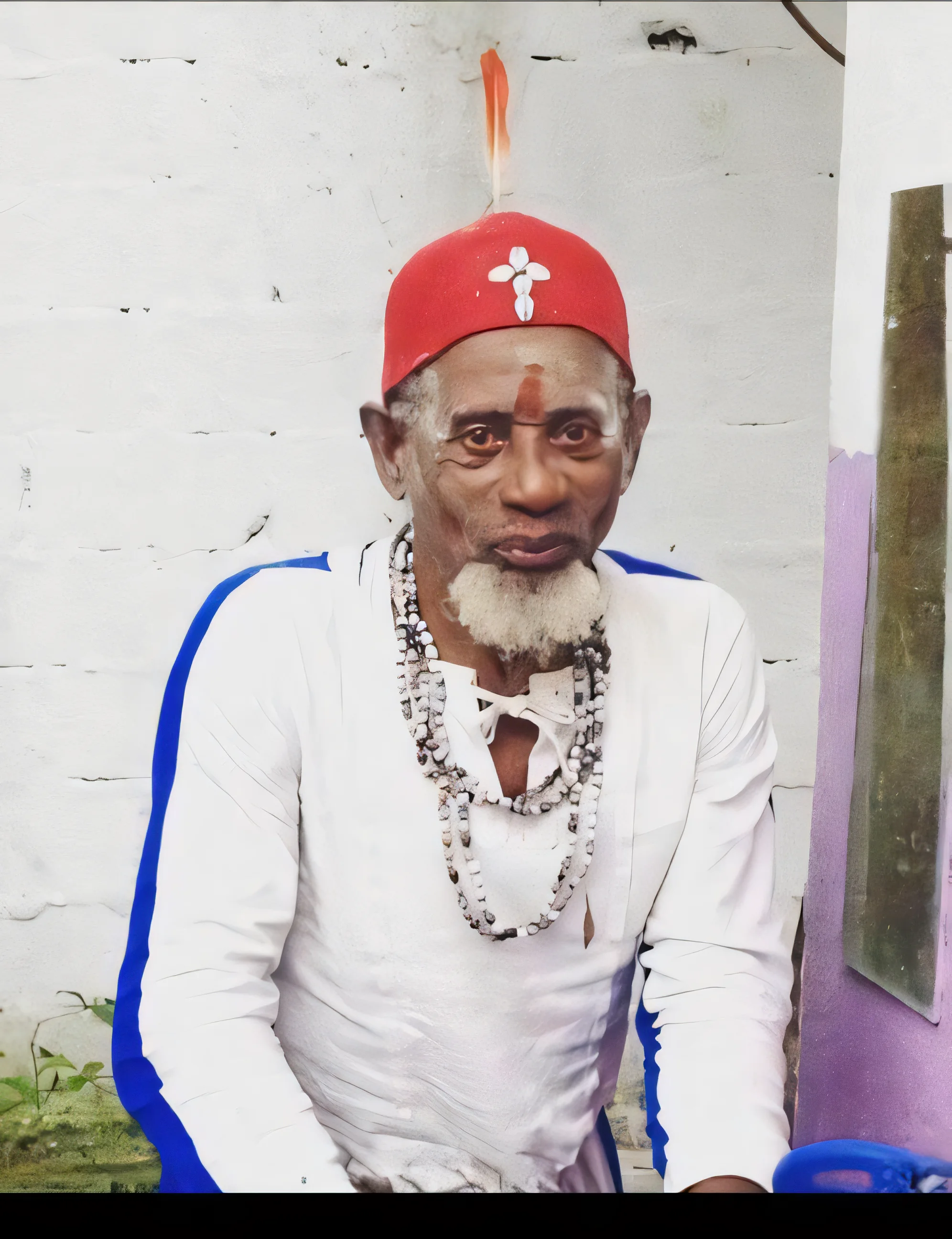
Papa André Ngi Ovono in Bwiti ceremonial attire
Papa André in Bwiti ceremonial attire · Ebando archive photo
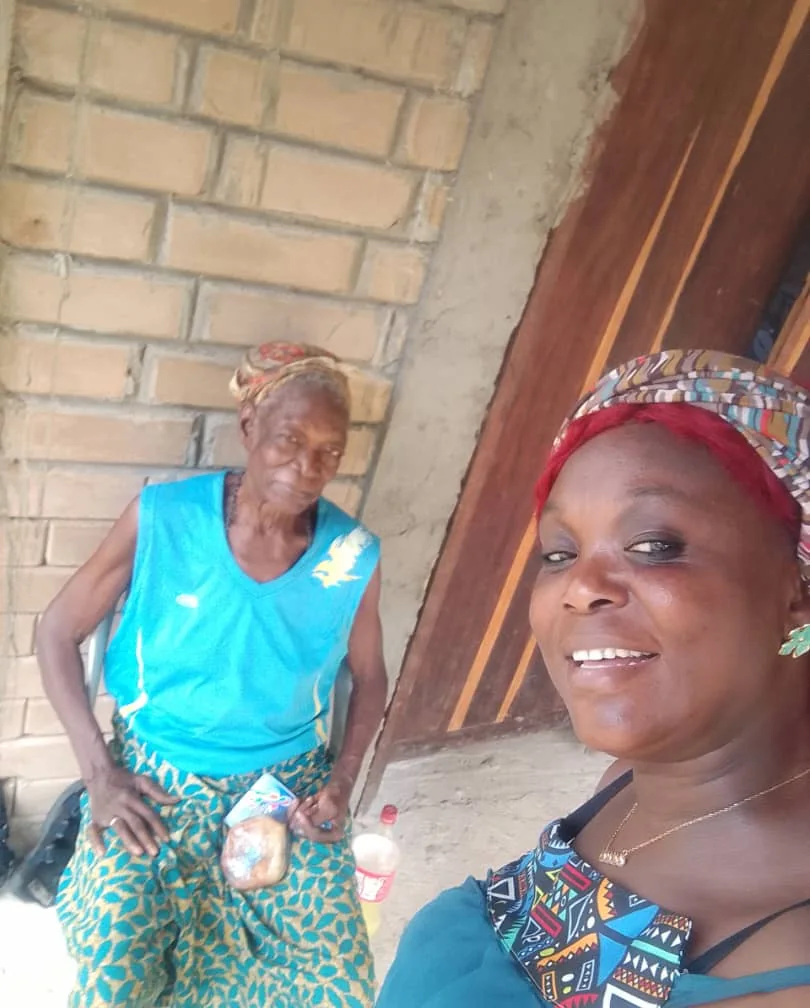
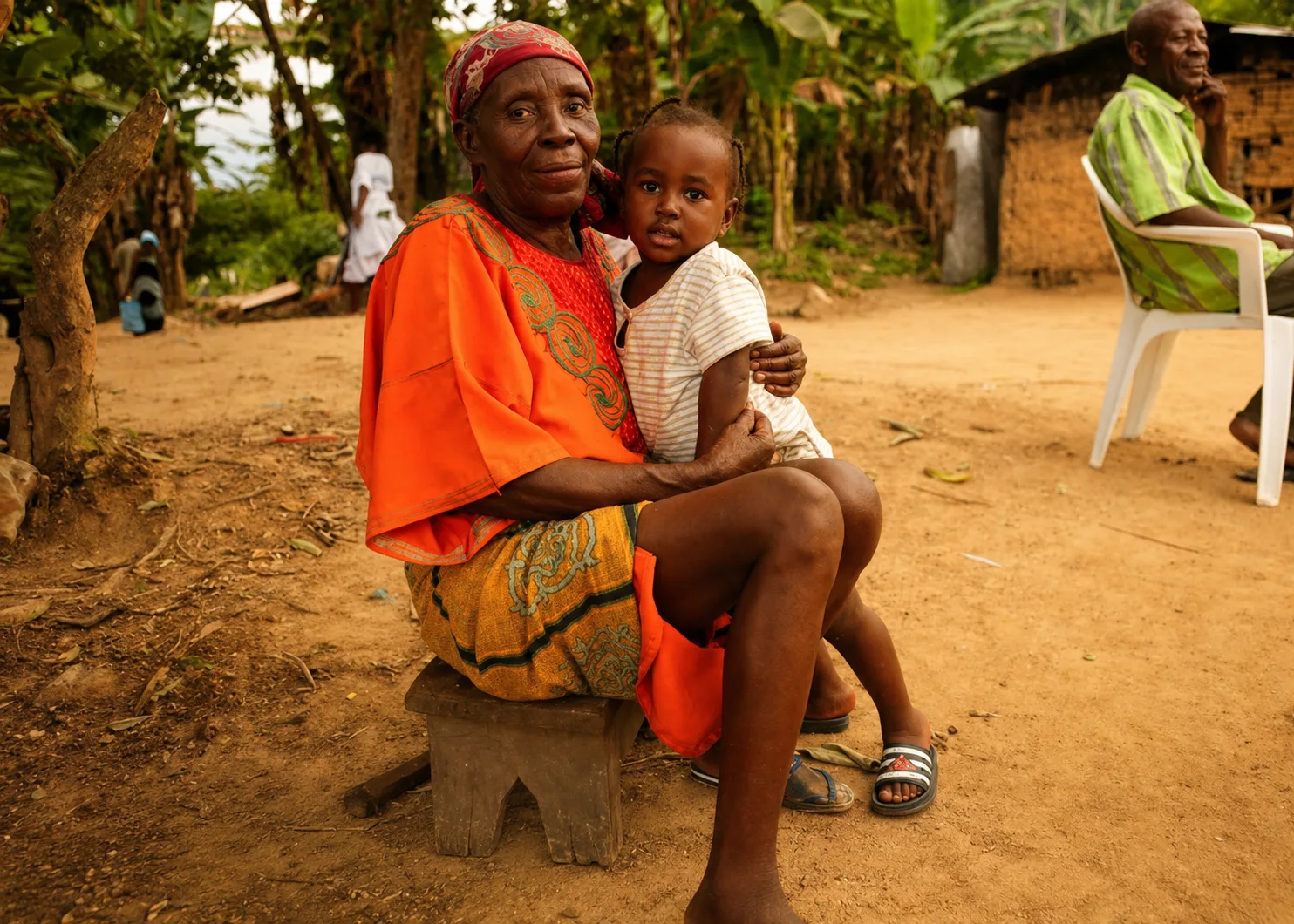
Maman Lucie, Papa André's widow, with her granddaughter Chimène at the village
Maman Lucie, Papa André's widow and Chimène's grandmotherMiraculous synchronous witness to the arrival of the Masked Spirit, on 30 September 1999, between the paws of the first bound nganga and the feet of the man.

A path, step by step

From Gascony to the equatorial forest.

Before Ebando, there is a life: a young man from Gascony who arrived in Gabon in 1971, a friendship sealed on a night of breakdown, two rare initiations and years in the service of the villages.

Hugues Obiang Poitevin grows up in Gascony, in south-western France. On 10 October 1971, at twenty-one, he arrives in Gabon to join his mother, Madame Villas. Having come at first for fifteen days, on a Gabonair DC6 charter flight, he would stay by choice. He will not leave. His mother has rested in Gabon since 2013, alongside their son Noé, loved by all, who passed away at twenty-four; three of his children were born on this soil. He settles in Libreville and would later describe himself as a “cultural métis”. He would become a Gabonese citizen in 2005. As he likes to put it: “I became Gabonese after thirty-three years of presence and love for the country, its nature, its cultures and its people.”

His working life as a road haulier, from 1976, leads him to travel the country and to encounter the local cultures, then so disparaged by the imported religions. It is one of those roads that, on the night of 2 August 1976, near Kango, after a car breakdown, leads him to knock at the only lit door in the village. It is that of André Ngi Ovono — Papa André, the “Dalai Lama of Gabon” —, liturgical harpist and great healer of the Bwiti. From that night a friendship is born that will end only with the death of Papa André, in 2017. It is also the threshold through which Tatayo will enter, over the years, into the tradition.

In 1979, Tatayo is initiated into the Bwiti Fang Dissumba — the path tied to the Sacred Wood and the Iboga of the Fang peoples of northern Gabon — by Evariste Nguema Mba Ndong, Papa André's elder brother. He is the first Westerner initiated into the Bwiti Fang. Evariste would pass away from tetanus on 9 August 1979, just three weeks after this initiation. The Bwiti Dissumba, “which saves”, as the peoples of the forest affirm.

Tatayo does not remain a spectator. In 1980, carried by that initiation, he founds a first “association for the agricultural and cultural promotion of the Gabonese village”, with Daniel Odimbossoukou and Catherine Oneto, both since departed. Rural cooperatives follow, set up with Jean Robert Rengouwa: a demanding undertaking that came into being only with difficulty, despite the wholehearted commitment of these companions. Understanding that a structure able to fund action from its own profits is needed, he founds the company Trip Gabon (Transports Rapides Inter-Provinciaux) in 1984. For nearly seventeen years, its profits would directly fund rural micro-projects in the service of the villages.

In 1993, Katy Euillet, mother of their 3 children, and Tatayo are received into other traditional rites of the Middle Ogooué, with Jean Tsanga, who later became Motamba (“Root of the Earth”). It is through this path that Tatayo is initiated into the Bwiti Misoko Ngondé na Dipouma, tied to the Akèlè Simba tradition, in central Gabon. He is the third Westerner to be initiated into it. Receiving both lineages — Dissumba among the Fang and Misoko among the Simba — is rare. It is this twofold transmission that would later give Ebando its position of reference, without making it a school.

Before and after the birth of Ebando, Tatayo has also been a bridge for culture between Gabon and the world. In 1996, the Association of the Friends of the Equator Circus enables twenty-two Gabonese artists to sign a two-year, renewable contract with the Barnum & Ringling Circus, in the United States. In 2004, Ebando is the driving force behind the Gabonese part of the String Music Festival, over ten days, at the French Cultural Centre, since become the French Institute, a success carried in particular by the host Irène Labeyrie and the conductor Toups Bebey.
Transmission, from one generation to the next

The ngombi is not kept, it is passed on.

Papa André was the keeper of the ngombi, the sacred harp. At Ebando, the instrument and the song pass from hand to hand, down to the children of the house.

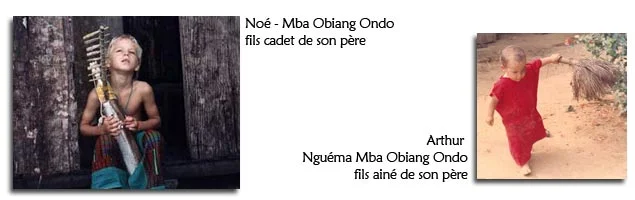
Family archive from Ebando: two children of the house, one holding the ngombi, the sacred harp
Ebando family archive

Listen — sound archives from Ebando

Ngombi — Theophile Rissani
Bwiti chant — Mwemba

The founding myth · 30 September 1999

The Truth risen from the water.

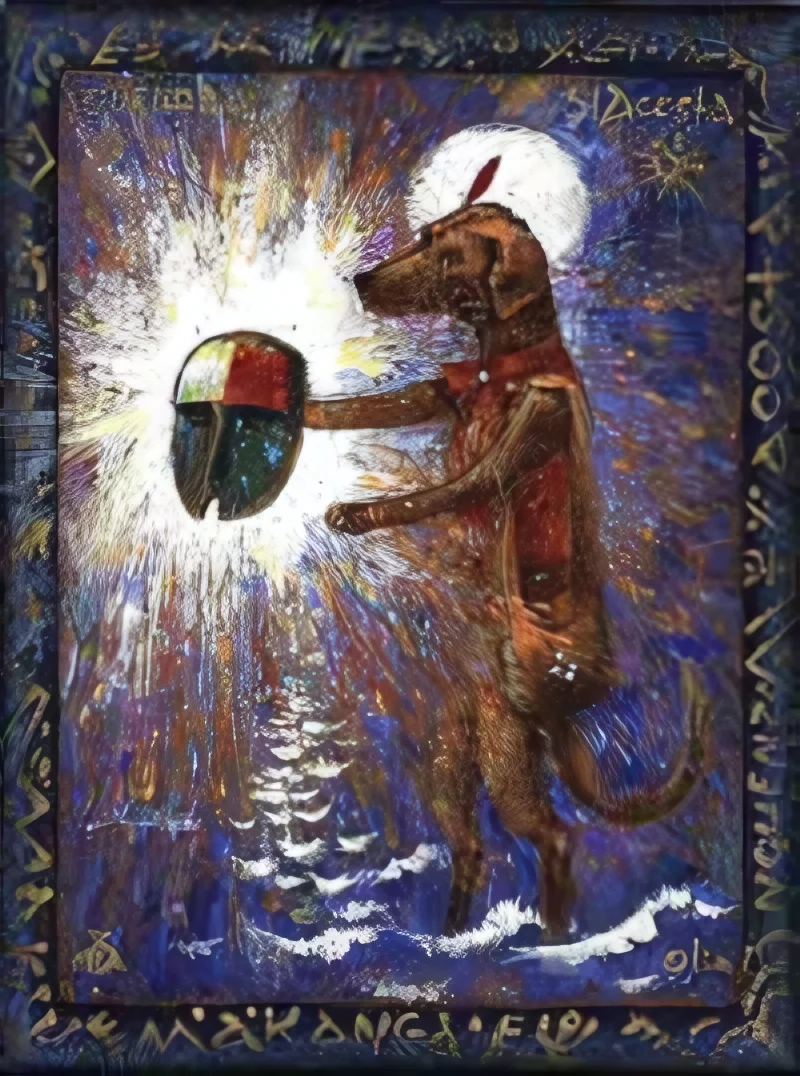
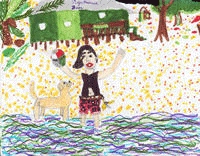
Naive painting by Olia Ditengou Tumilovich: a dog and the Mvudi mask risen from the water, scene from Ebando's founding myth
The dog and the Mvudi mask, the icon painted by Olia Ditengou Tumilovich, our neighbour turned sister, given to Tatayo for his 50th birthday on 12 April 2000, about 200 days before the arrival of the masked Spirit
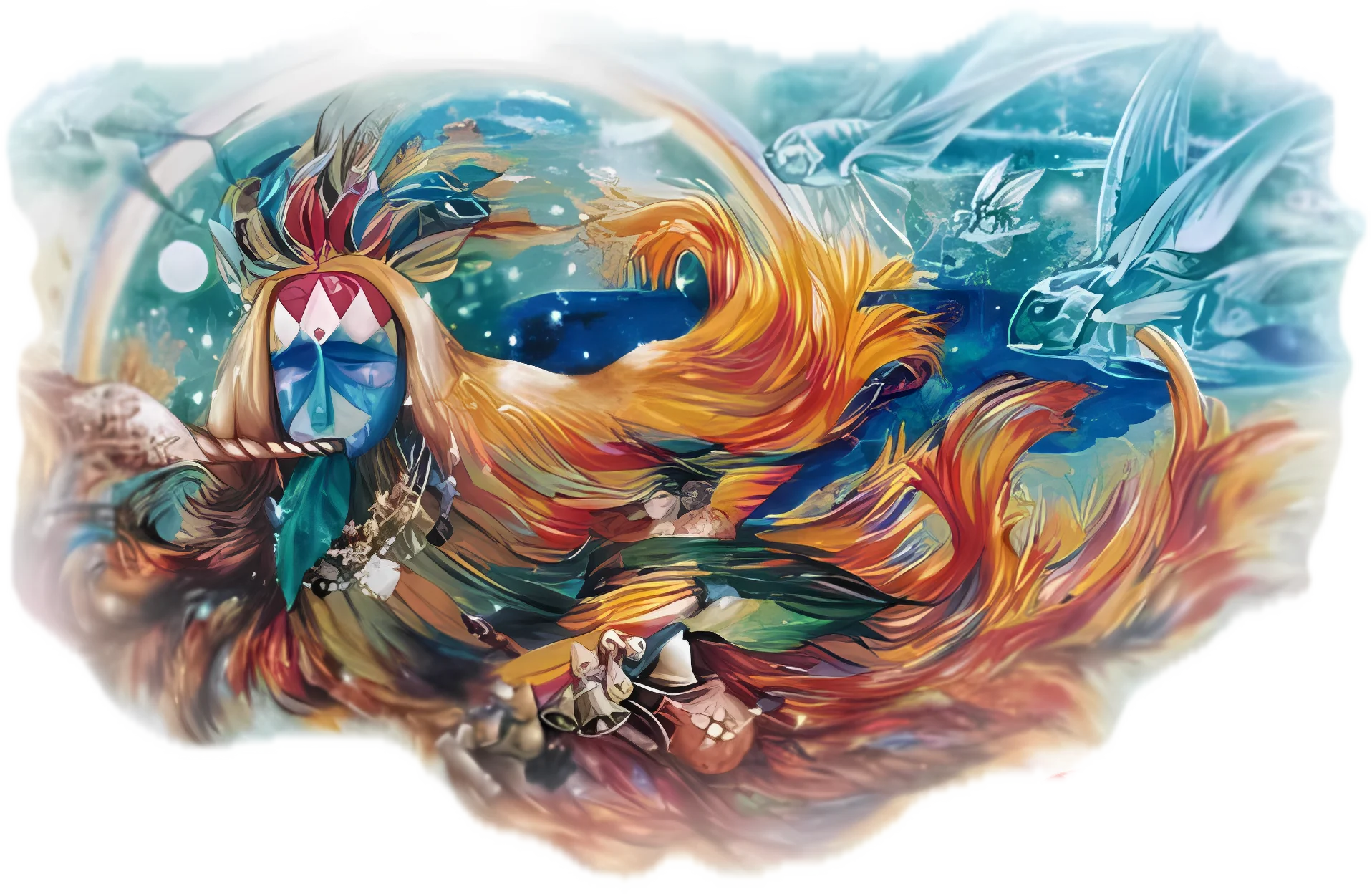
The masked Spirit, a painting by our sister Olia Ditengou Tumilovich (Makapenga)
The masked Spirit, the large painting by our sister Olia Ditengou Tumilovich, painted the month after the arrival of the Spirit. Aka Makapenga@yahoo.fr

On 30 September 1999, during a joint initiation — a young Frenchman and a child of the country — the morning after a vigil blending for the first time the Bwiti Dissumba and Misoko rites, a singular event took place.

An old dog, named Accosta, was led to the nearby ocean to rid him of his fleas. At low tide, around noon, under the gaze of the witness Minkoué Mobiang, between the dog's paws and the man's legs, an object was floating. At first it was taken for a wooden bowl. It was a mask.

A spirit danced by seven peoples of the deep country, this mask, “Mvudi-Marumba”, had come that far by the Ogooué river and then along the coast. When consulted, a respected customary chief, the Mutamba, “saw” that an elder, having failed to find someone to whom he could pass on the spirit of his lamp, had entrusted it to the power of the Water — the origin of all spirits.

Barely arrived at the village, the mask was named “Ngenza” (in Yipunu) or “Abel'Ebebela” (in Fang) — that is to say “the Truth” — by the ten-year-old child initiated that very day. Arriving with its mouth open, drowned, this painted wooden face was at once revived with a leaf from a fruit tree. Ever since, it sticks out its tongue, as humans do.

“I washed my dog and I met God.”The poet witness

From the meeting of these two lineages — the Ombwiri Ekang Fang Dissumba and the Bwiti Akèlè Simba Misoko-Ngondé — and from the approval of the Invisible carried by the Mvudi-Marumba mask, more than five years later Mboma na Ditsuala would be born: an eclectic rite, a chosen blend of practices from the North, Centre and South of deep Gabon.

It is from this encounter between nature, water and the spirits of the forest that Ebando takes its name and its reason for being: to unite nature, culture and the future.

Seven milestones

Memory in polaroids.

Seven milestones, seven photographs. On hover, each polaroid straightens up and regains its colour.

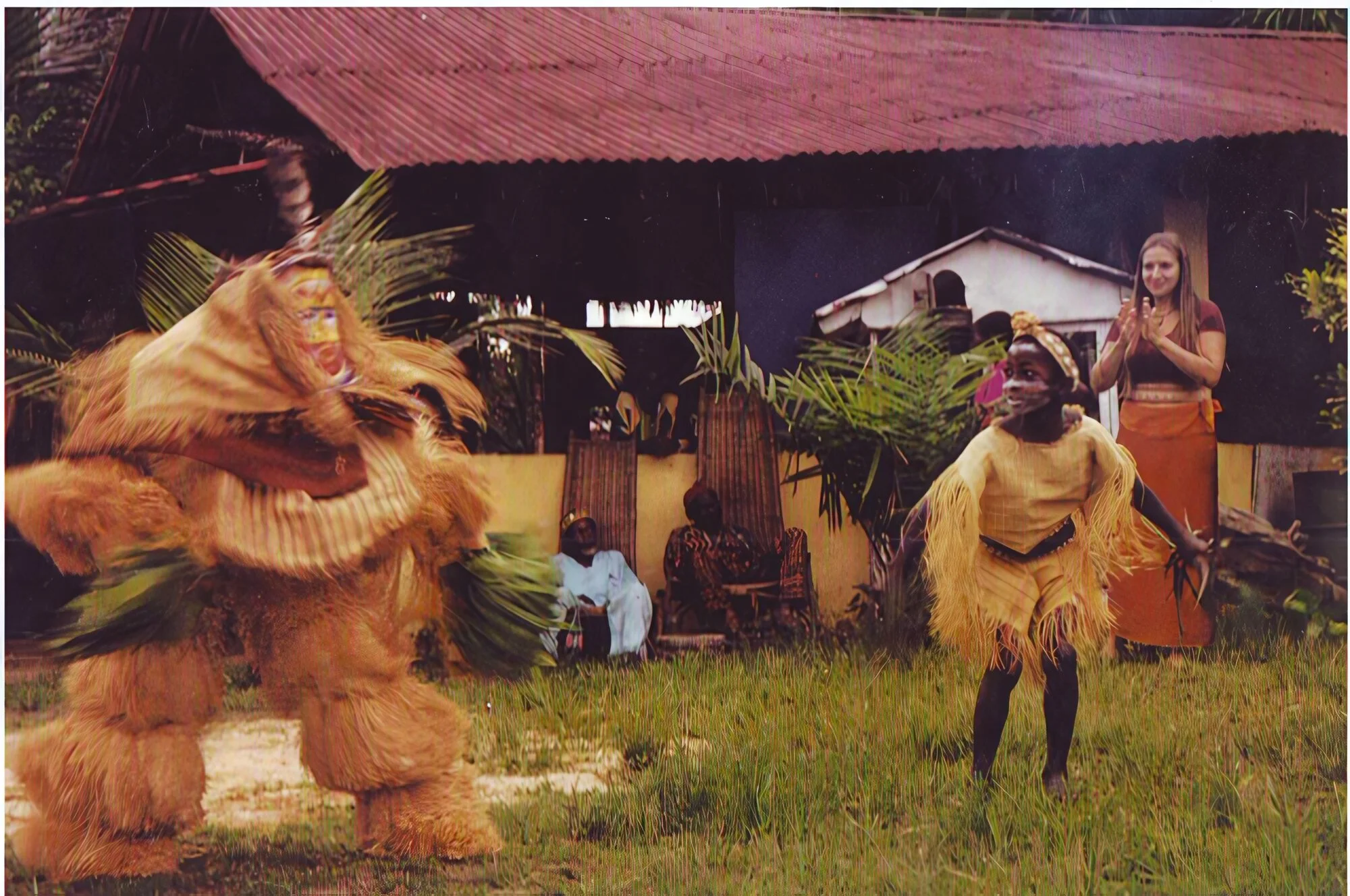
  1. Raffia-costume dance at an Ebando gathering, an archive from the early years in Gabon

    1971

    Arrival in Gabon

    On 10 October, at twenty-one, Hugues Obiang Poitevin — Tatayo — arrives in Gabon to join his mother. He will not leave: he settles in Libreville and, after thirty-three years of presence and love of the country, becomes a Gabonese citizen in 2005.

  2. Misty road in the equatorial forest, the night of the encounter near Kango

    1976

    The founding encounter

    On the night of 2 August, near Kango, Tatayo's car breaks down. He knocks at the only lit door: that of André Ngi Ovono. From this encounter, everything else would be born.

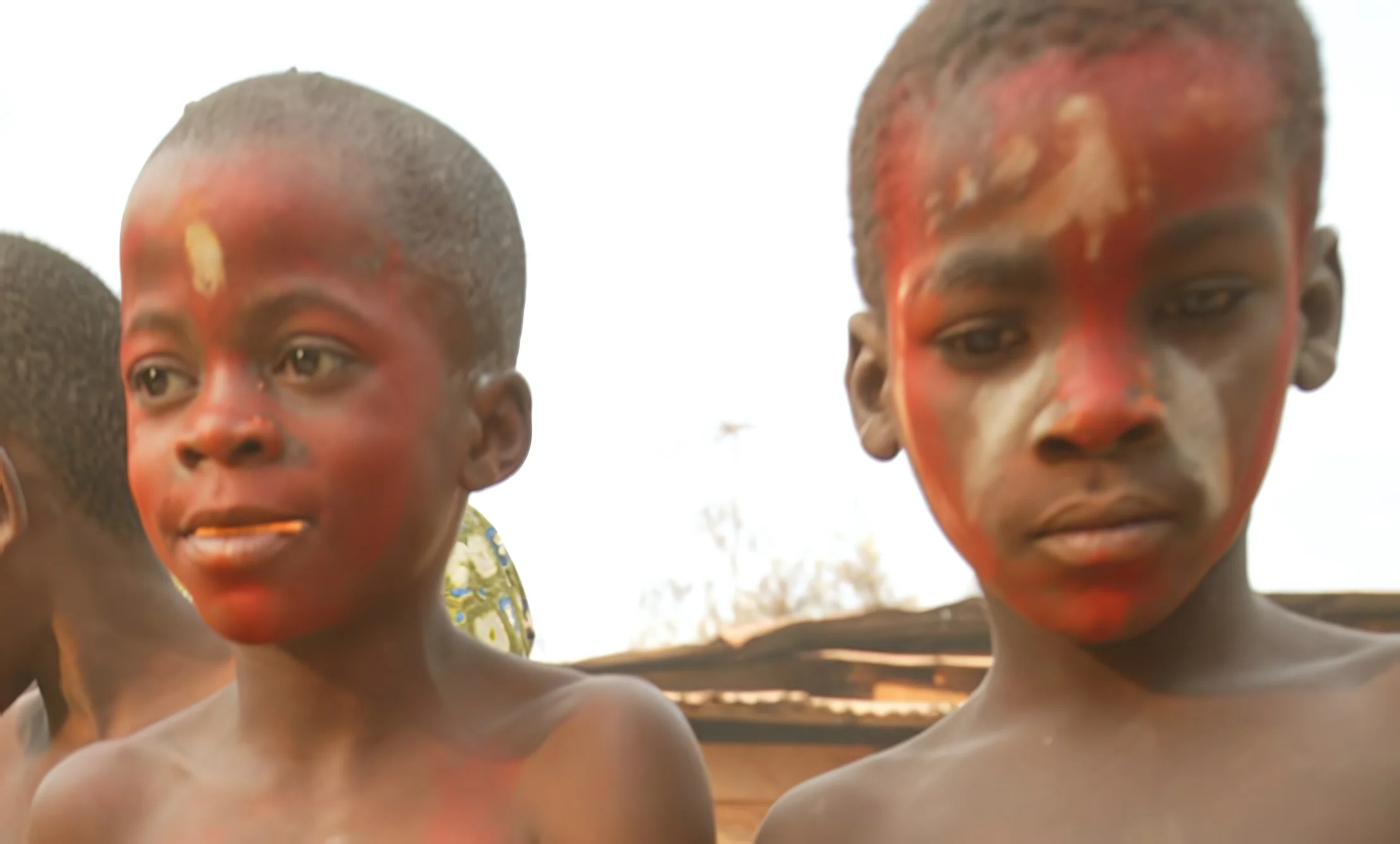
  3. Two young initiates with faces painted red and white, the Bwiti Fang tradition

    1979

    The first initiation

    Tatayo is initiated into the Bwiti Fang Dissumba, the path tied to the Sacred Wood and the Iboga of the Fang peoples of northern Gabon, by Evariste Nguema Mba Ndong, Papa André's elder brother. He is the first Westerner initiated into the Bwiti Fang.

  4. Hands at work, a symbol of the rural micro-projects funded by Trip Gabon

    1984

    Trip Gabon funds the land

    Tatayo founds Trip Gabon. For nearly seventeen years, its profits directly fund rural micro-projects and the logistics of small cooperatives, in the service of the villages.

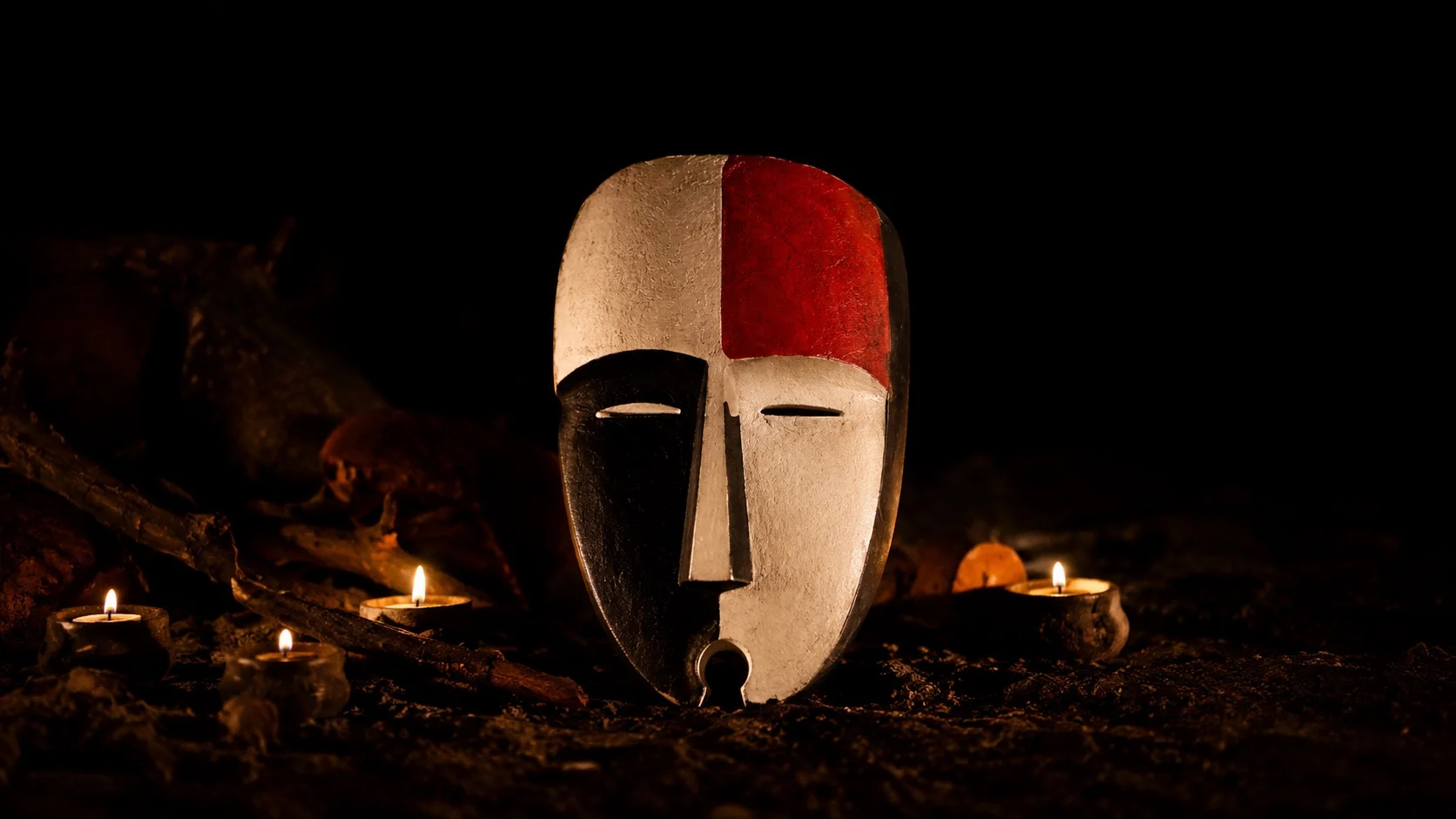
  5. Bwiti mask on a black background, echoing the founding Mvudi mask

    1999

    The birth of Ebando

    On 30 September, during a joint initiation blending the Dissumba and Misoko rites, the Mvudi mask is found floating on the ocean at Akanda. Ebando — “the rebirth” — is founded: the ANCE, Association Nature Culture Ebando.

  6. Portrait of André Ngi Ovono, co-founder and honorary president of Ebando

    2017

    André Ngi Ovono passes away

    On 15 December, the co-founder and honorary president of Ebando passes away. With him goes part of the living memory of the Gabonese Bwiti tradition.

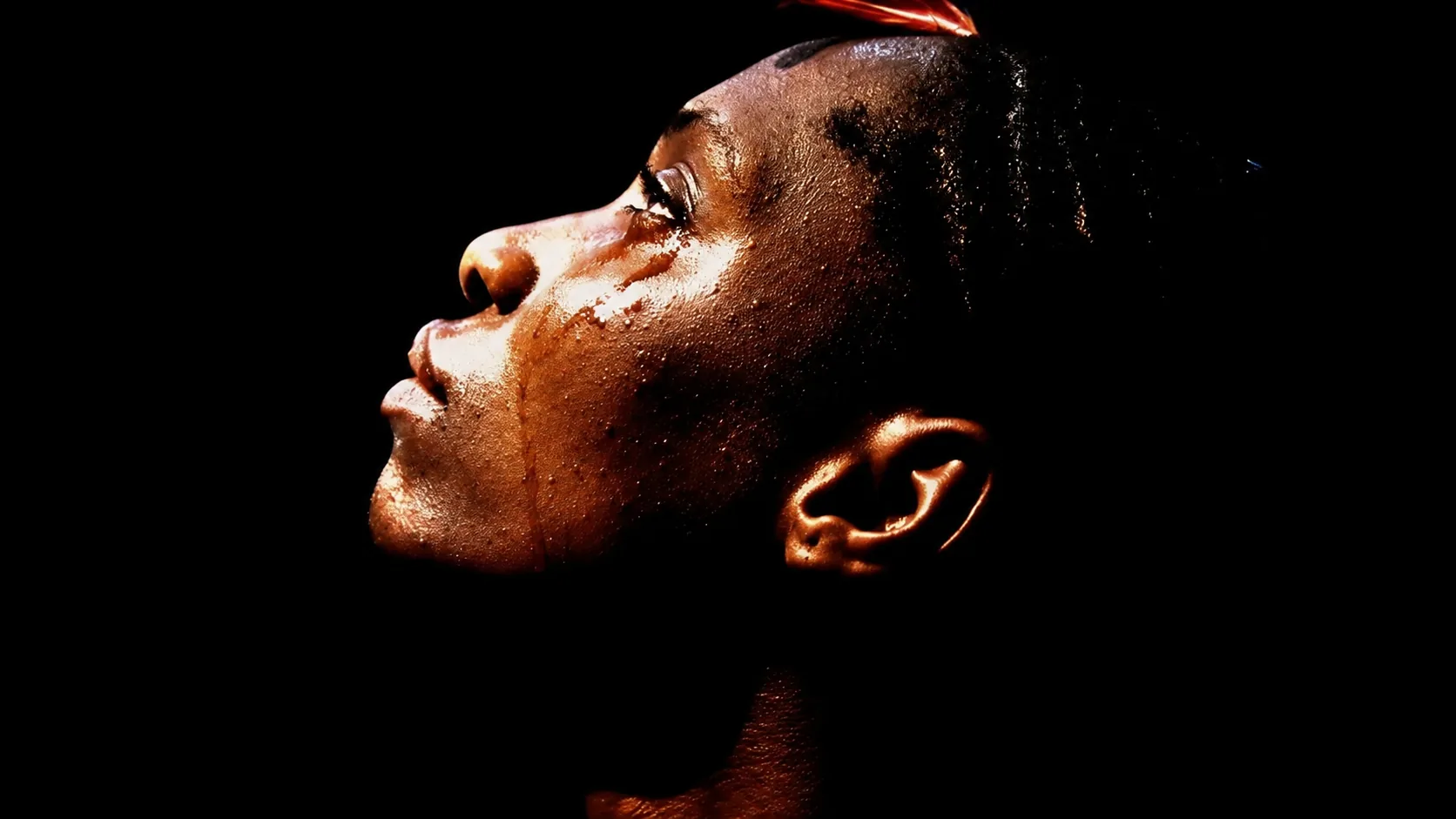
  7. A woman's face raised toward the light, echoing the film and the colloquium on violence against women

    2024

    The Colloquium on Violence

    On 16, 17 and 18 January, Ebando co-organises the Colloquium on Violence with the Department of Psychology of Omar Bongo University, carrying forward the film Mivova y'ato and more than twenty years of gathered testimonies.

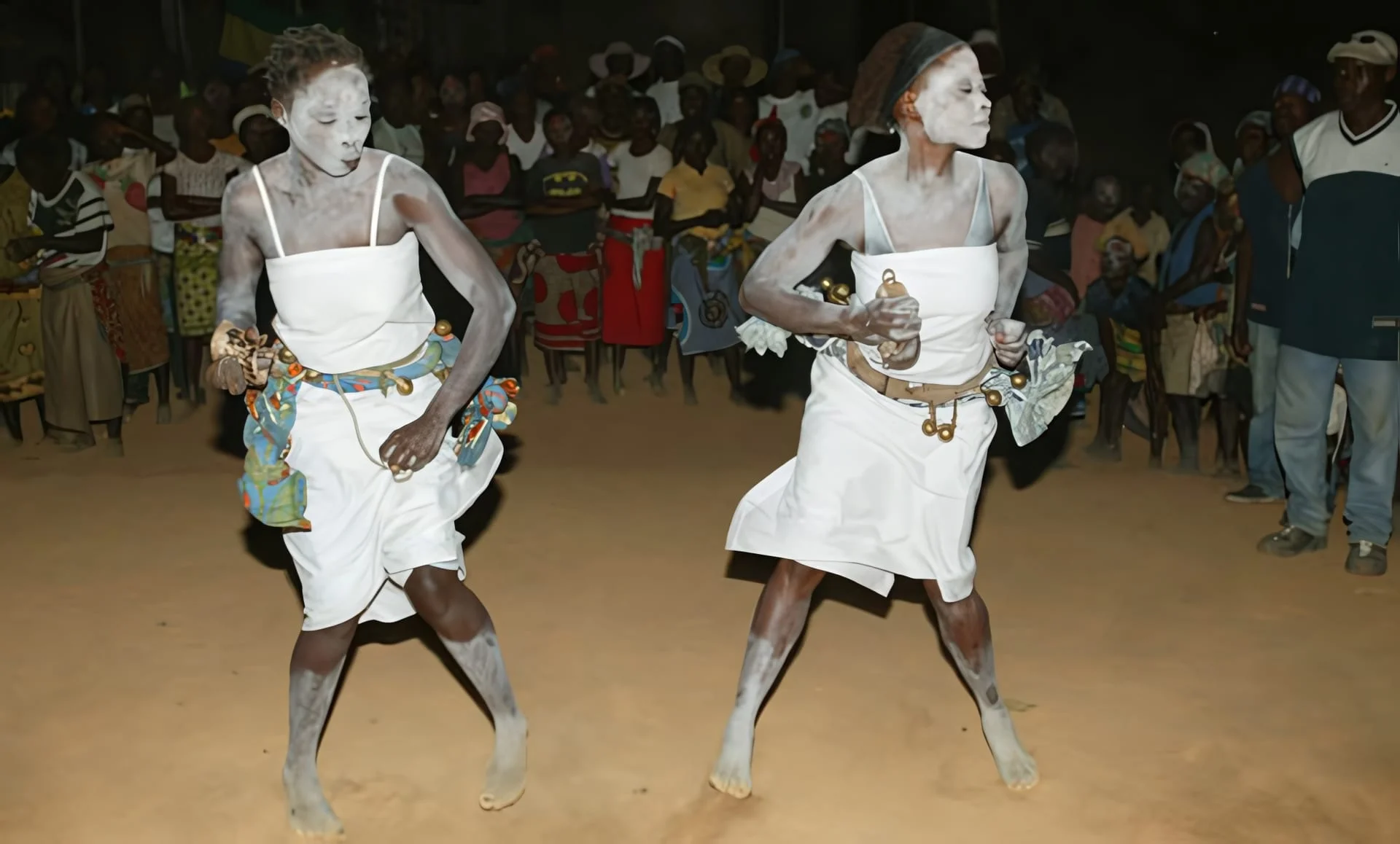
Dancers with bodies painted in white kaolin during a night Bwiti ceremony, before the village assembly
A Bwiti ceremony danced at night, the kind of scene Cheyssial filmed from within.Photograph

A gaze from outside

Jean-Claude Cheyssial,
filmmaker and ethnologist.

Cheyssial is the eye that filmed the inside of the Bwiti to show it to the rest of the world. An independent documentary filmmaker and ethnologist, he was accompanied by Tatayo in his reportages at the heart of the Gabonese tradition. His films remain a precious gateway for anyone who wishes to understand the tradition without entering it.

A long-standing friend of Ebando, without being a member, he made a form of visibility possible — always respecting what is not to be shown.

Read his letter of recommendation

La Nuit du Bwiti · 1995

The documentary film.

La Nuit du Bwiti (1995), a documentary by Jean-Claude Cheyssial on the Bwiti initiatory society, featuring Tatayo. Filmed in Gabon, broadcast on RFO, France 3 and TV5. In French.
An initiation is not something that can be rushed. It takes time, and patience.

Bwiti tradition — Ebando 2026

The rooting

Two traditions, one transmission.

The Bwiti Fang Dissumba and the Bwiti Akèlè Simba Misoko-Ngondé are two distinct initiatory lineages. The first comes from the Fang peoples of northern Gabon, the second from the Akèlè (Simba) of the centre. Each has its own chants, its rhythms, its masks, its cosmogony. Each has its own way of caring for the visitor, of accompanying them, of opening them to what is transmitted.

Tatayo is initiated in both. This twofold transmission is rare. It is what allows Ebando to hold a position of reference, without being reduced to a school. The transmission is carried collectively by the transmitters present: Tatayo, Pemba, Bokaye, Maviango, Mambweté, Tata.

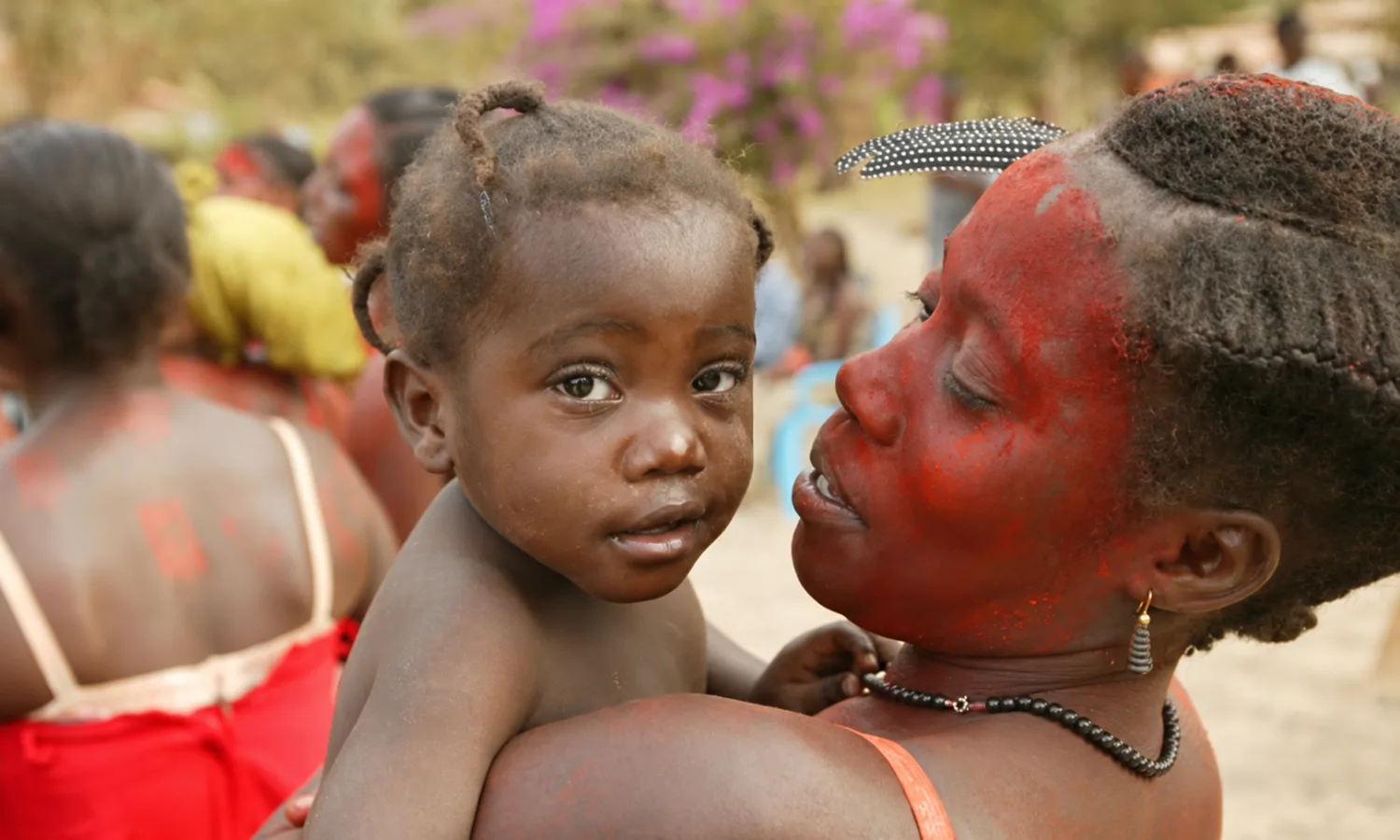
A mother with her face painted red holds her daughter in her arms at a village gathering in Gabon
Transmission is first lived in one's arms: a mother and her daughter, at a village gathering.Photograph

Bibliography

To go further through reading.

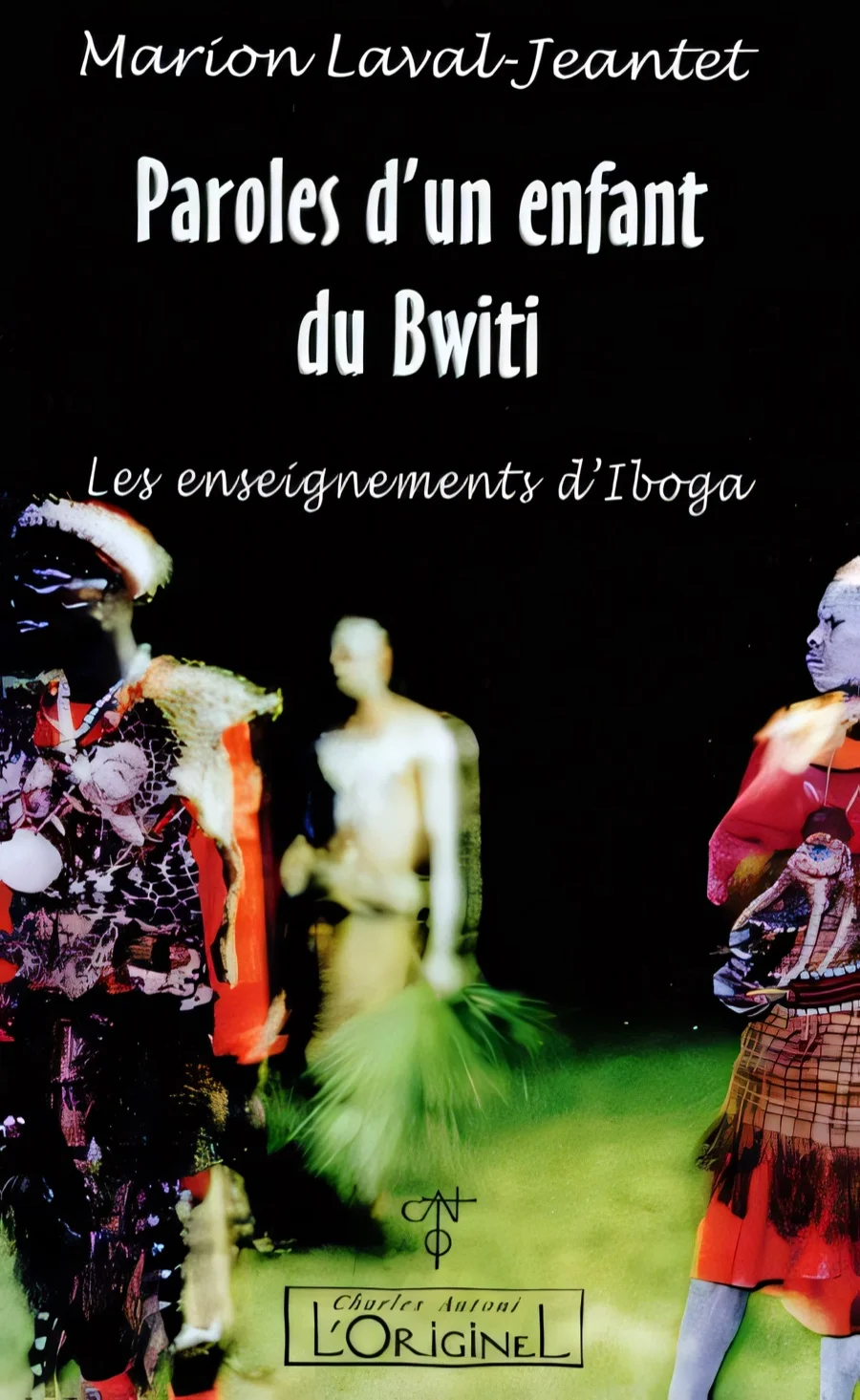
Cover of “Paroles d'un enfant du Bwiti”, Marion Laval-Jeantet
Marion Laval-Jeantet — Paroles d'un enfant du Bwiti. The teachings of Iboga, gathered through interviews with Tatayo (L'Originel - Charles Antoni, 2005).
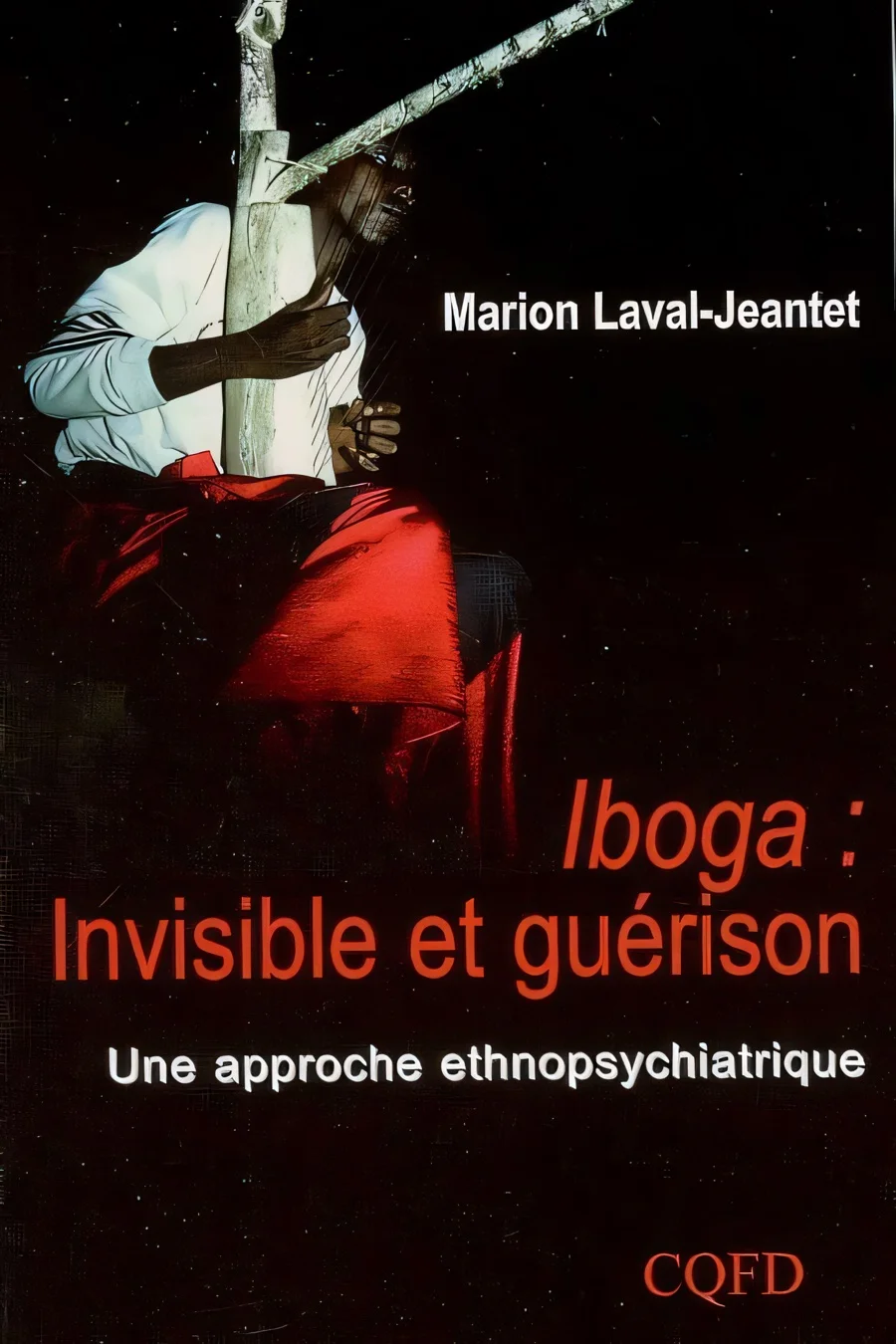
Cover of “Iboga, invisible et guérison”, Marion Laval-Jeantet
Marion Laval-Jeantet — Iboga, invisible et guérison. An ethnopsychiatric approach to the Bwiti and to Iboga, drawn from her doctoral thesis (CQFD, 2006).
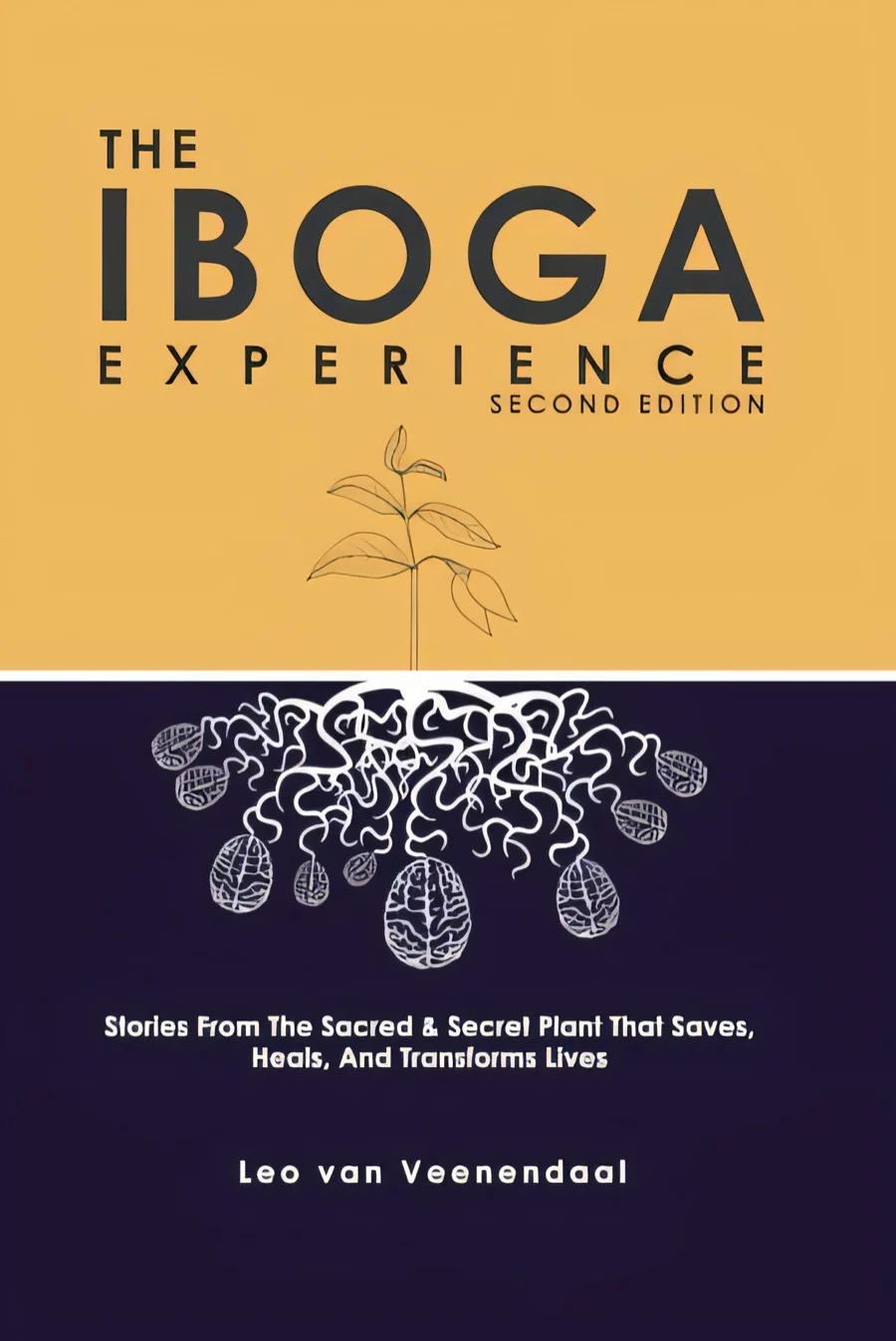
Cover of “The Iboga Experience”, Leo van Veenendaal
Leo van Veenendaal — The Iboga Experience. Stories and advice around Iboga; the author was initiated into the Bwiti at Ebando, in Gabon, in 2018 (self-published, 2023).

Voices speaking of it elsewhere

Podcasts, books, public testimonies.

Today

Ebando continues.

Six referents. Several ceremonies a year. A transmission that is not rushed. Visitors received within a framework, accompanied, who leave with what they have to receive. Daily life is made of craft, music, welcome, care, and presence to the equatorial forest that borders the place.

To understand is already to begin.