
Discover · First peoples
For more than twenty years, Ebando has worked with the forest peoples of Gabon as a cultural mediator. Babongo, Baka and Bakoya. They are not subjects of folkloric study. They are partners.
To set the first peoples within a relationship of reciprocal exchange of knowledge.
— Statement of purpose, Pygmies of Central Africa colloquium, Omar Bongo University, 2002
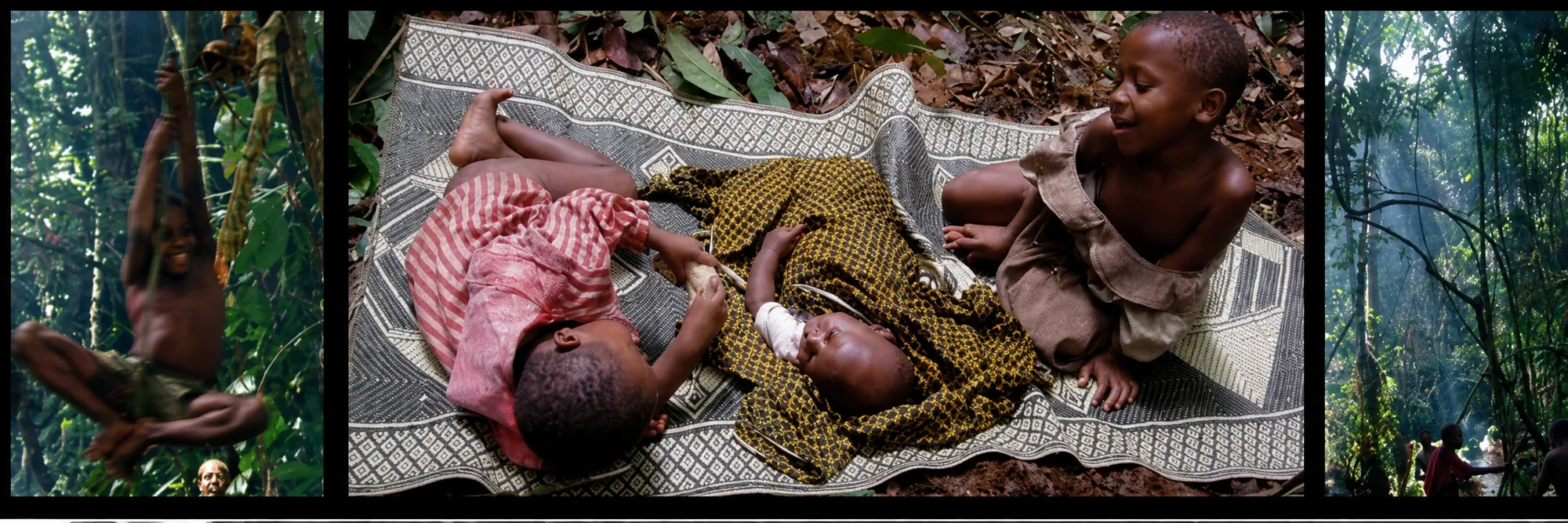
The first peoples of Gabon are the first inhabitants of the great equatorial forest of the Congo basin. Babongo, Baka (Bibayak), Bakoya, Akoa, and several other groups besides. They know the forest as no settled people ever could. Their expertise in pharmacopoeia, hunting, music, dance and ritual holds a richness that academic research has long recognised. What is rarer is to give them a voice directly.
Ebando has contributed, modestly, to this effort of endogenous visibility. In 2002, during the colloquium on the forest peoples of Central Africa at Omar Bongo University, in collaboration with the LUTO and the French Cultural Centre. In 2004, as cultural mediator for BBC 2 (the Tribe series with Bruce Parry) and for Discovery US (the Flying Fox Productions team). And continuously, as a channel of transmission between messages coming from outside and their recipients in the forest.
Three groups, three regions
Not one people, but peoples.
The first peoples of Central Africa do not form a single homogeneous group. The Babongo of the centre, the Baka of the north and the Bakoya of the east speak different languages, occupy distinct territories and have their own social organisations. Ebando works with all three.
Babongo
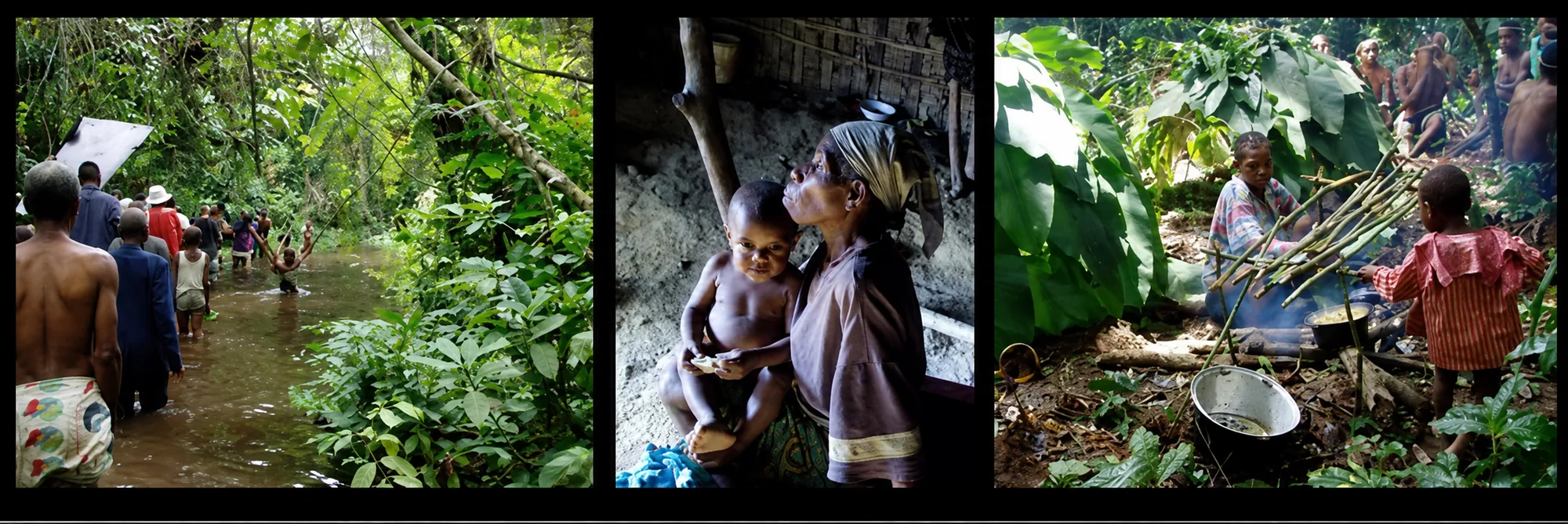
The Babongo live in central Gabon, in the forest massif of Bouvondo. It was with them that BBC 2 filmed a documentary in 2004 for the Tribe series, with Bruce Parry, who was initiated into Iboga during his stay. Ebando acted as cultural mediator for that shoot, and has since maintained an ongoing relationship with the Association of the Babongo Pygmies. One month in the dense forest, a three-hour walk from the nearest drivable track, to film their daily life and their rites.
Baka (Bibayak)
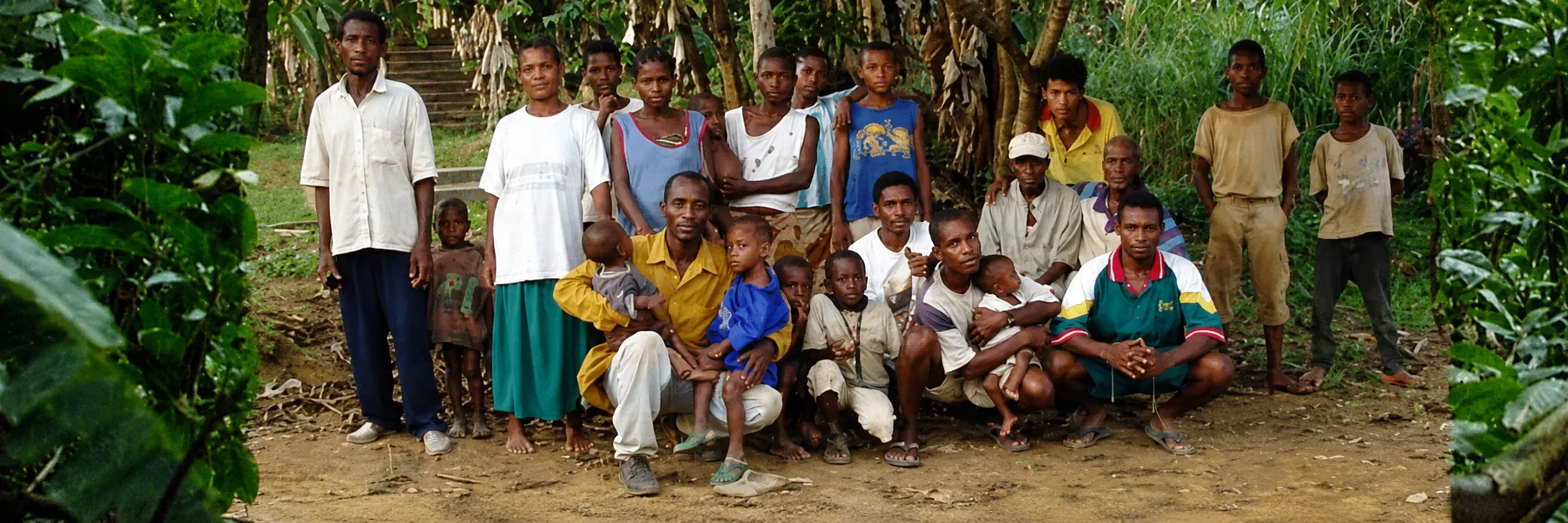
The Baka of northern Gabon, also called Bibayak, are the keepers of Edzengui, the dancing forest spirit of the dense forest. In February 2002, they stayed at Ebando's headquarters during the colloquium on the forest peoples of Central Africa organised by Omar Bongo University. Ebando accompanied a Flying Fox Productions team (Discovery US) to film them in their daily life, both ordinary and ritual. The relationship continues through the Edzengui association, whose secretary general is the anthropologist Mvé Mebia Emmanuel.
Bakoya
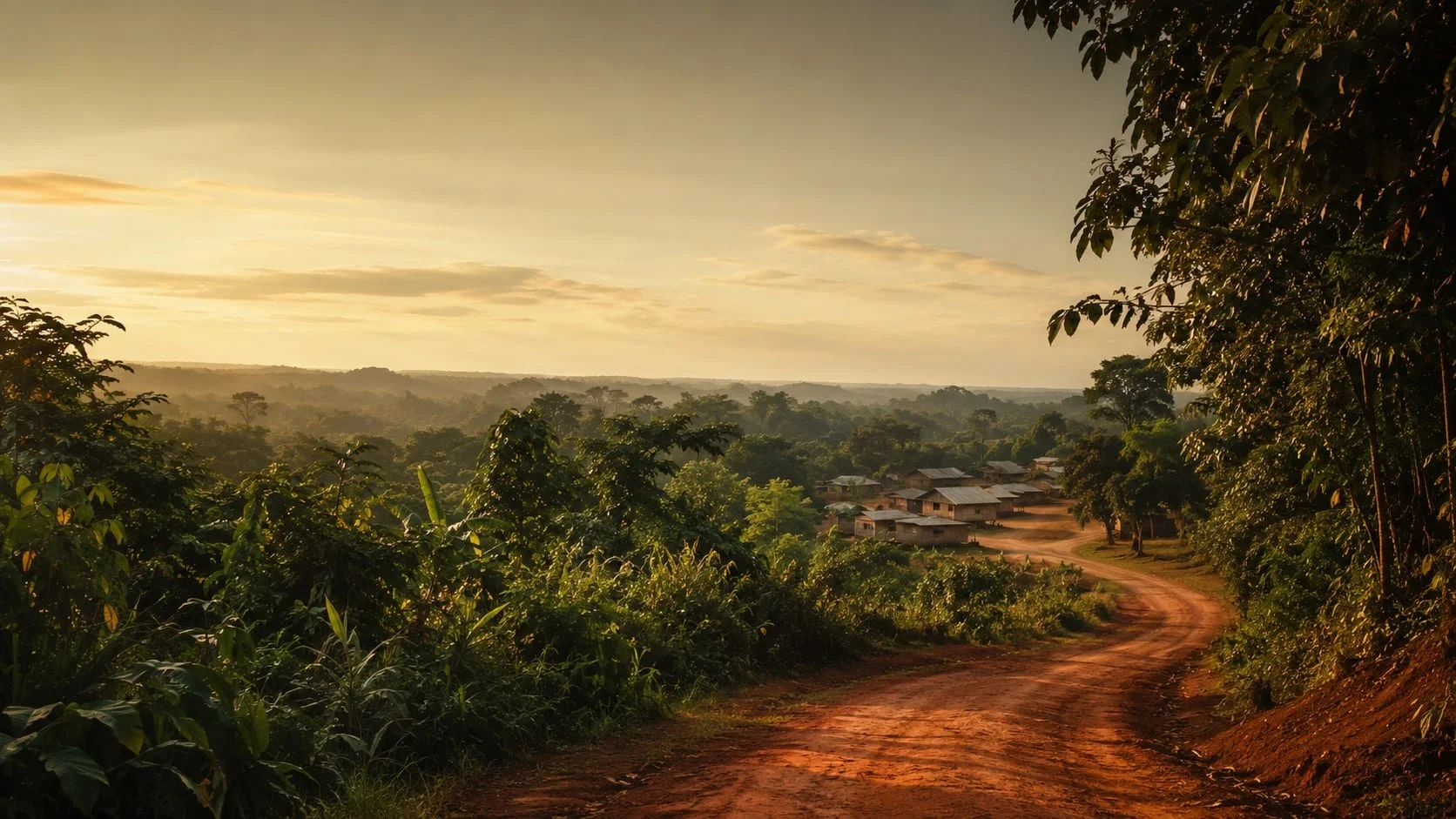
The Bakoya live in eastern Gabon, around Mékambo. Ebando works with the MINAPYGA association (Indigenous Minority of the Pygmies of Gabon), which represents them, and whose president is Léonard Odambo.
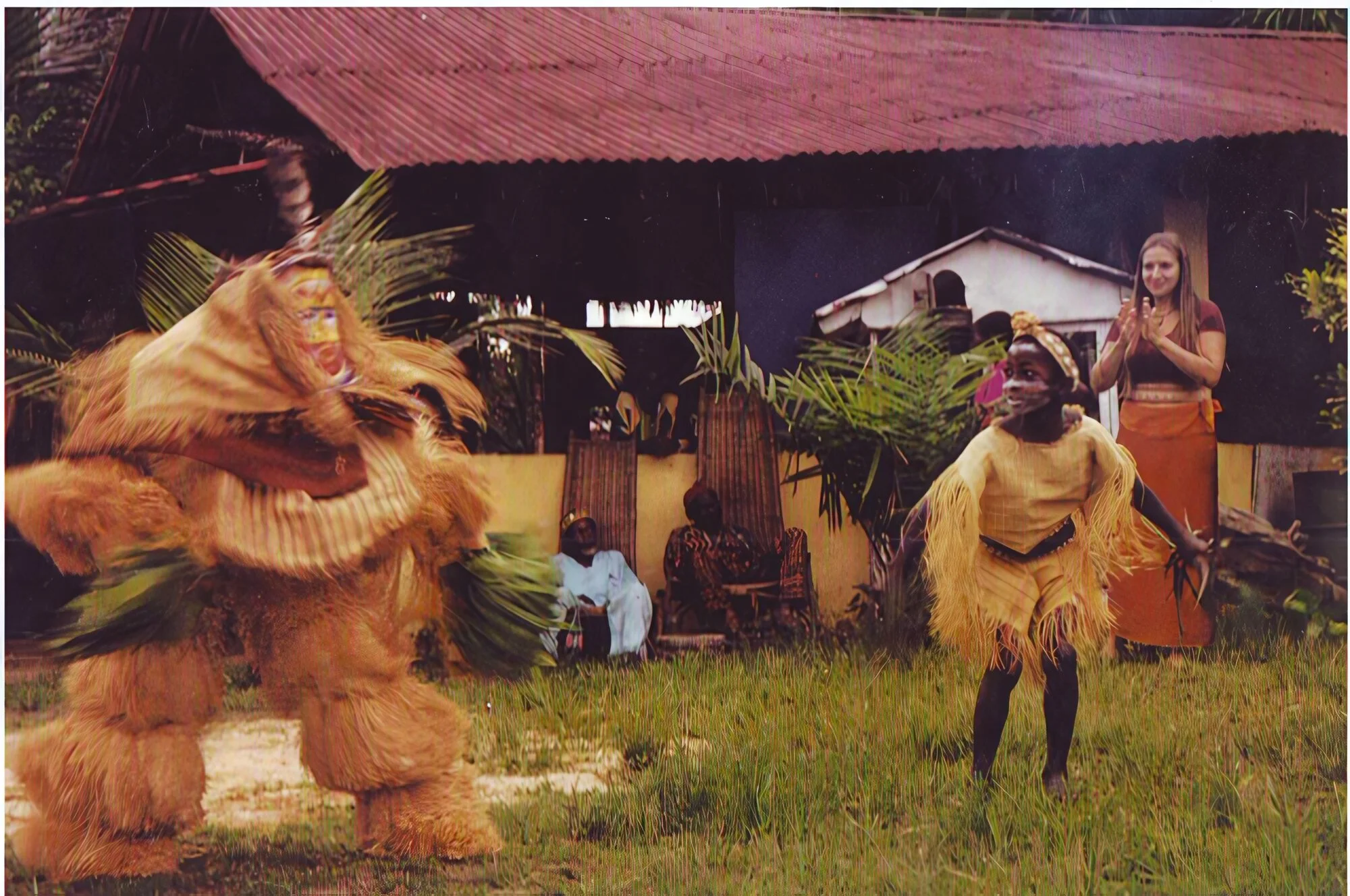
Edzengui, the spirit of the forest
The spirit of the mask dances.
It is not a stage prop.
Among the Baka, Edzengui is the dancing forest spirit of the dense forest. The raffia mask is not an exhibition object: it carries a ritual, living function that only their own people transmit.
Ebando's role
Mediator, not spokesperson.
Ebando's work is to translate and relay : to pass on the messages coming from outside (researchers, journalists, film crews) to the local associations, and the other way round. Not to speak in their place.
The 2004 BBC Tribe shoot (Bruce Parry among the Babongo) is the most visible example. But the bulk of the work is invisible: transport, translations, prior negotiations with the elders, checks on ritual protocol, fair sharing of resources.
Questions fréquentes
Frequently asked questions about the peoples of Gabon
- Who are the Babongo?
- The Babongo are a first forest people of central Gabon, in the Chaillu-Bouvondo forest massif. Long hunter-gatherers and today partly village-dwellers, they speak the languages of their Bantu neighbours. They are recognised as one of the peoples at the origin of the Bwiti and of the use of Iboga. For Ebando they are not subjects of study but partners, through the Association des Pygmées Babongo.
- Do the Babongo practise Iboga?
- Yes. The Babongo are tacitly recognised as being at the origin of the Bwete, as they are said to have passed on their use of the Iboga-Eboghé plant to the Membè and Meriè peoples during their migrations. A ritualised knowledge that was later transmitted to the other peoples of the Deep Country in the forestry camps, from the late 19th and early 20th centuries. Discover the initiation →
- What is the difference between the Babongo, the Baka and the Bakoya?
- They are three distinct first peoples, by language and territory. The Babongo live in central Gabon (Chaillu-Bouvondo massif); relay: the Association des Pygmées Babongo. The Baka, or Bibayak, live in the north and are the keepers of Edzengui, the dancing forest spirit; relay: the Edzengui association. The Bakoya live in the east, around Mékambo; relay: MINAPYGA. It is not a homogeneous group.
- Who are the pygmies of Gabon?
- "Pygmies" is the historical term for Gabon's first hunter-gatherer forest peoples: Babongo, Baka, Bakoya and others. Ebando prefers "first peoples" and their own names; the word "pygmies" survives only in the official names of associations, such as the Association des Pygmées Babongo or MINAPYGA (Indigenous Minority of the Pygmies of Gabon).
- What is the BBC "Tribe" episode about the Babongo, with Bruce Parry?
- "Babongo" is an episode of the BBC Two documentary series Tribe: filmed in 2004, Bruce Parry lives among the Babongo in central Gabon and is initiated into the Bwiti through Iboga. Ebando provided the cultural mediation for this shoot, a month in the dense forest, three hours' walk from the track, and has maintained an ongoing relationship with the Association des Pygmées Babongo ever since.
- What does Ebando do with the first peoples of Gabon?
- Ebando acts as a cultural mediator, not as a spokesperson. For over twenty years, the association has connected outside actors (researchers, journalists, film shoots such as BBC Tribe in 2004 or Flying Fox / Discovery) with the associations that represent the first peoples: Edzengui, MINAPYGA, the Association des Pygmées Babongo. Nothing happens without mediation or the agreement of the local relays. Write to Ebando →
An encounter takes preparation
If shared work calls to you, we take the time it needs.
An exchange, a mediation, a piece of research carried out with respect for the local intermediaries. Write to us, and we will pass it on to the association concerned.