
A path · Break free from a dependency
Cut the bond
that holds you.
There is a thread between you and it. The relief lasts an hour; what comes back afterwards lasts the night. Others before you came with that same rope around their wrist, and they set it down.
What you carry
At first, it was to feel good. An hour of respite, a little air. Today, it is mostly to stop feeling bad. The next time only serves to soothe the one before. You are no longer the one deciding. It is. A merry-go-round whose every turn you know, and that you cannot step off.
You have tried already. Ten times, maybe more, sometimes with an end date you did not keep. It was not willpower you lacked. What holds you is not on the surface, where one fights. It is underneath, at the root, in what the dependency comes to cover over. You do not cut alone, in a corner, a bond that holds this tightly.
And there is the part you speak of to no one. The shame that whispers you are the problem, that you are beyond repair. You are not. The problem is the bond, not you. No one here will ask you to justify yourself.
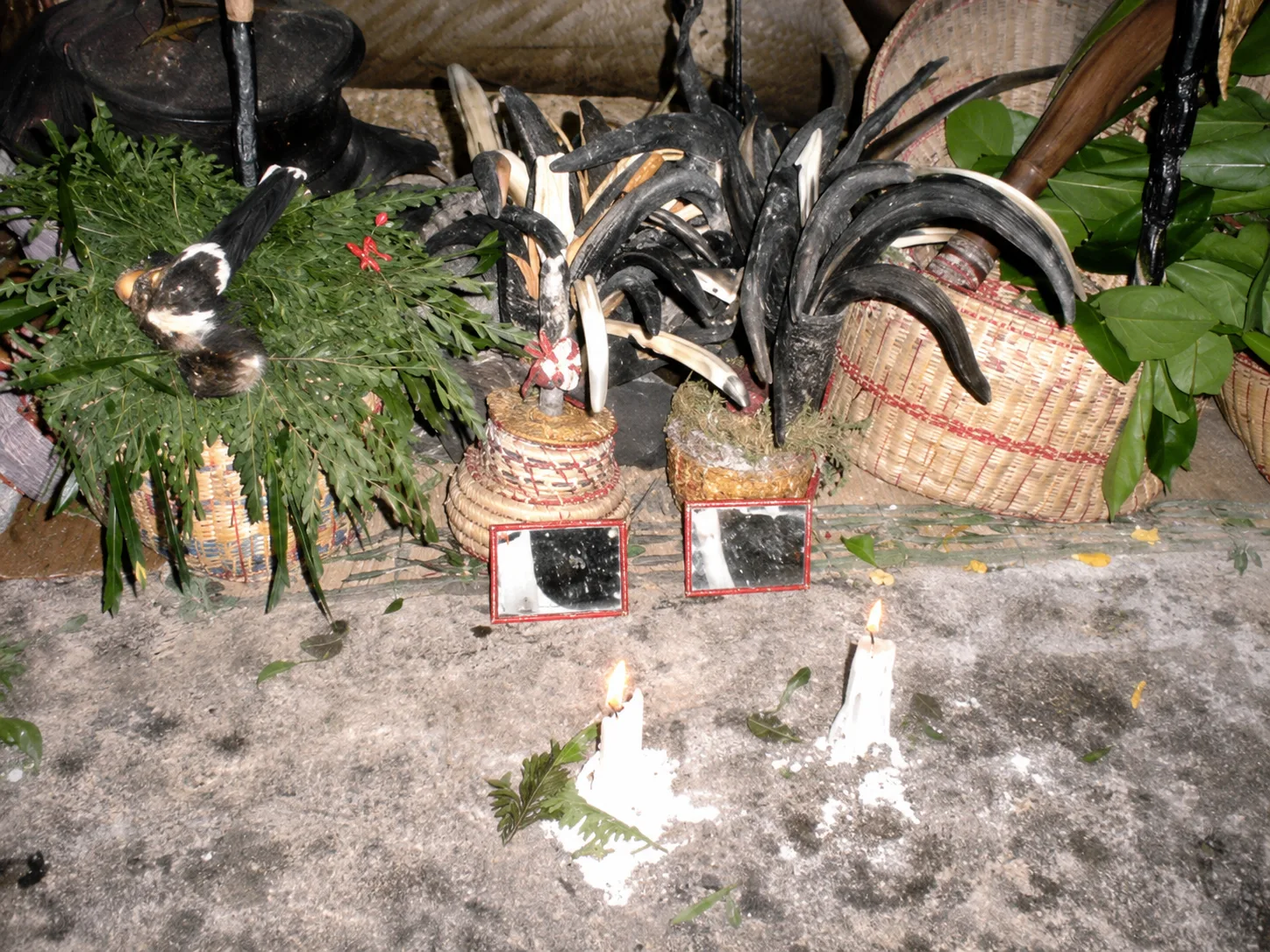
You are no longer the one deciding.
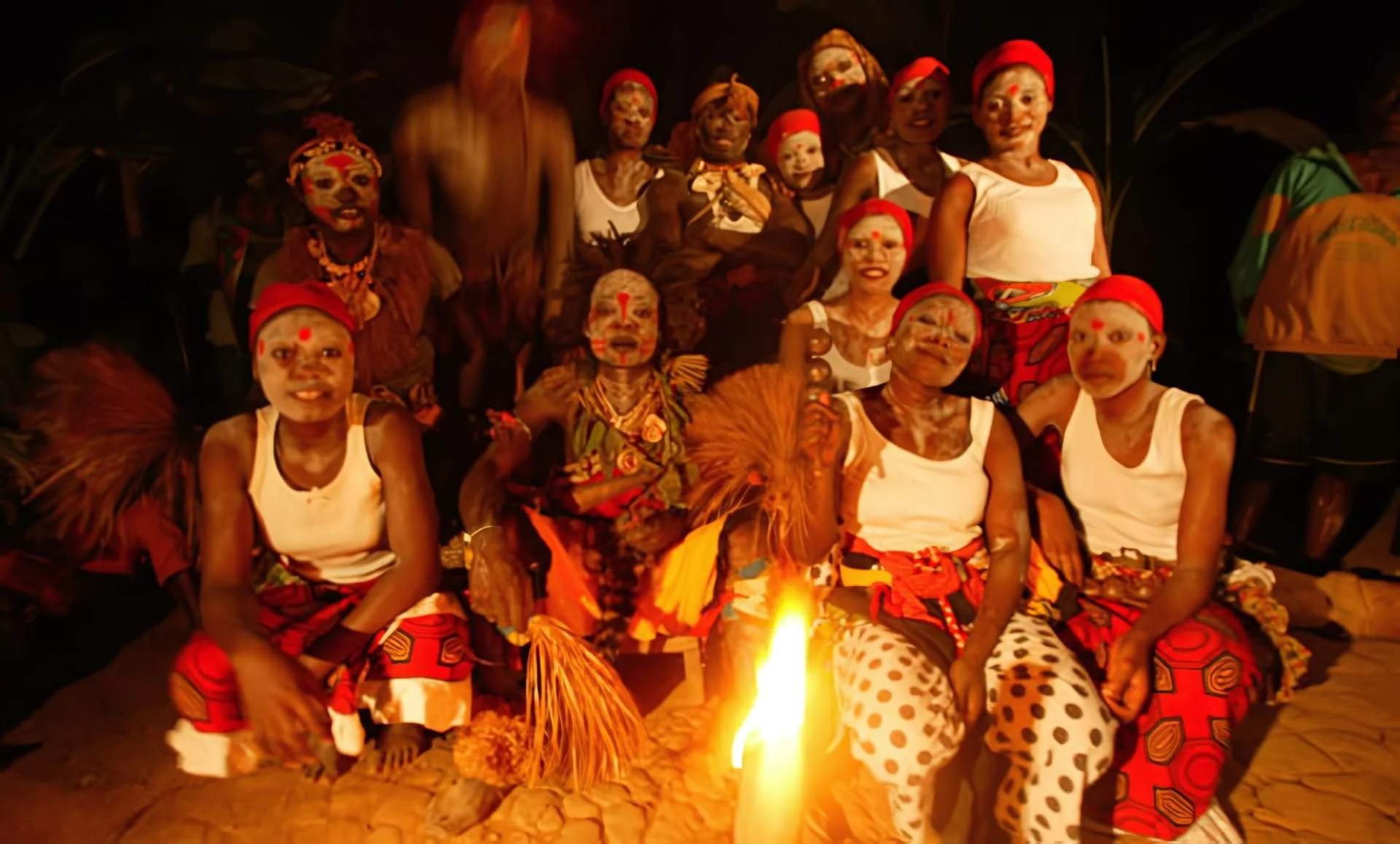
A need that lets go.

Start clean.
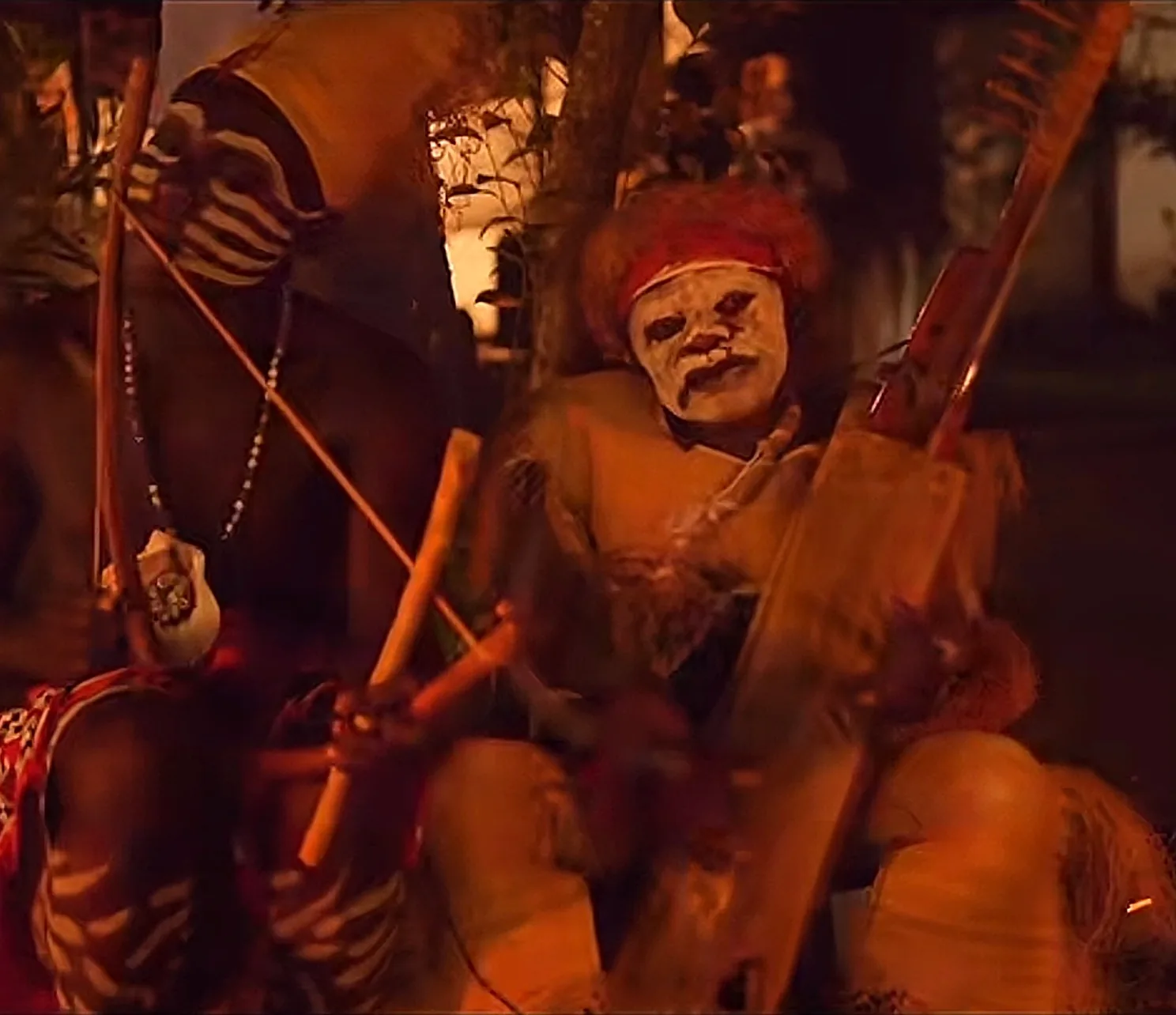
What those who came walk toward
No longer needing it
The heart of this path is the complete initiation. Twelve days to find yourself again: four days of preparation centred on your intentions while you are purified, the long night around the Sacred Wood, then the time to recover and to integrate. The Bwiti tradition lives it as a symbolic death followed by a rebirth. You go in carrying a weight, you come out otherwise.
What initiates describe is not a new willpower torn out by force, to begin again each morning. It is something that falls away. Habits that leave. A need that lets go. Not depriving yourself, but no longer needing it: it is not the same thing.
In the tradition, there is also a rite called « cutting the rope ». In its own words, it serves to break with habits tied to substances or medication, to cut the bond with old patterns and start clean. It is a threshold gesture, a marked before and after, a complement for those who carry it. But it is the whole initiation that makes the path. The rope you cut is the gesture. The rebirth is the path.
These are not our words, they are theirs
We convince no one. We let those who lived it speak, in their own words, as they wrote them.
I haven't drank alcohol or taken any sort of crap in a year. I hope you can see the chain that I had to break through, and I did this by choosing to take the road of Iboga.
I consider that I reached this goal: I no longer use these substances, and the reasons that drove me to them (unease, anxiety, depression) have disappeared, giving way to a kind of rebirth. After a week, enthusiasm, energy and contentment, as if I had freed myself of a weight, took their place in my life and have never left me.
I'm starting to discover a mysterious influence from the initiation, mainly on my habits: they're gone. It's a new level of freedom that I have to explore and adjust to.
Our seriousness, our responsibility
An Ebando initiation lasts twelve days, and you are never alone: a family sings for you, keeps watch with you. Everything begins with safety. The « cutting the rope » rite is an optional complement, for those who wish to mark the break with a gesture. It never replaces the initiation: it is the initiation, in its entirety, that carries the path.
And there is one point we say plainly, because honesty is part of the care. Ebando is a traditional initiation, not a detox clinic. If a dependency is severe and settled in the body, it also calls for suitable medical support alongside you, and we will tell you so without dodging. Here, we do not open a medical treatment: we open another path, beside it. Because we do not gamble with your life. We take care of it.
- Not a detox clinic
- A traditional initiation; a severe dependency calls for medical support alongside you.
- Medical certificate required
- ECG, liver panel and blood pressure before the initiation.
- « Cutting the rope », optional
- A complementary rite, never in place of the complete initiation.
Frequently asked questions
The questions one asks
- Can Iboga help me break free from a dependency?
- Many initiates describe that on returning home, old habits had simply let go. The Bwiti does not treat a dependency in the medical sense; it opens a passage, within a living tradition, where the work happens within you, accompanied from end to end.
- What is the « cutting the rope » rite?
- An optional ritual, a complement to the initiation, for those who want to mark the break: to break with habits tied to substances or medication, to cut the bond with old patterns and start clean. It never replaces the complete initiation.
- Does it replace a medical withdrawal?
- No. Ebando is a traditional initiation, not a detox clinic. For a severe dependency settled in the body, medical support remains necessary alongside you. We will tell you so plainly.
- Is it dangerous?
- Iboga has a real effect on the heart and the liver. That is why a medical certificate is required before any initiation: electrocardiogram, liver panel and blood pressure. The seriousness of the frame is part of the care.
- How long does the initiation last?
- The complete initiation lasts twelve days, in four movements: preparation, the night ceremony around the Sacred Wood, recovery, then integration on returning home. An initiation is not to be rushed. The day-by-day programme →
These answers do not replace a conversation with the team or medical advice suited to your situation.
The first step is simply to write to us
You do not have to arrive repaired.
Write to us, ask your questions, tell us where you are. We answer, simply, the way one welcomes someone.