
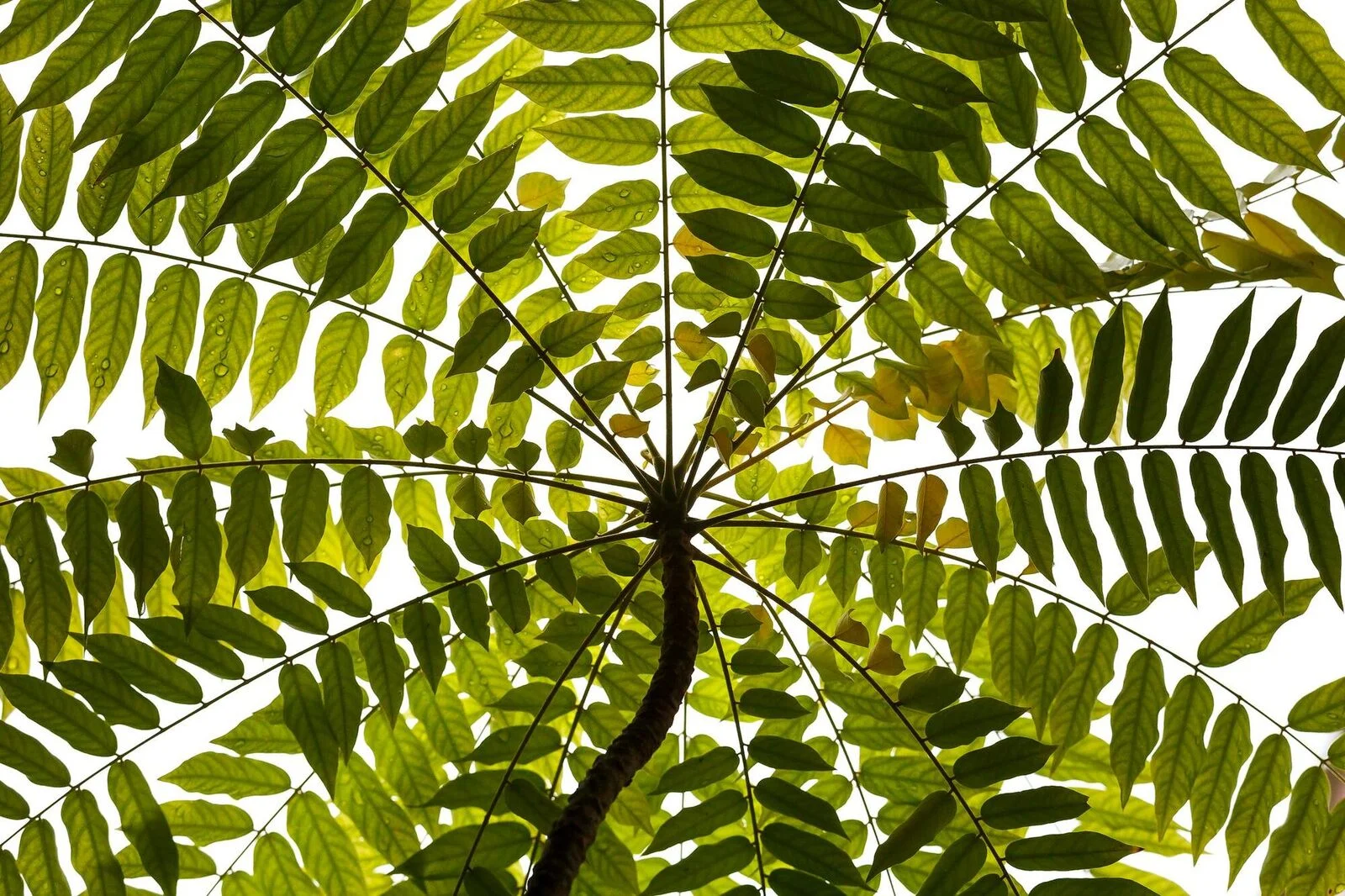
Dense canopy of the Gabonese equatorial forest, light filtering through
The initiation

What the research says · Facts · Levels of evidence

In one sentence

Iboga is the plant, a shrub of the Central African forest; ibogaine is its main alkaloid, isolated from the root bark. It is this molecule that research studies, above all for opioid dependence and, more recently, post-traumatic stress.

The published results are promising but preliminary: clinical observations and small, non-randomised studies, no large-scale controlled trial yet. The main medical risk, a lengthening of the QT interval that can trigger a cardiac arrhythmia, is real and documented.

Below is the state of knowledge, each claim sorted by level of evidence, with its source.

What the research says

Facts, their levels of evidence, and what Iboga does not promise.

Here is the current state of knowledge, with each statement sorted by its level of evidence and given its source. What is an established fact, what remains a line of research, what belongs to reported lived experience: we do not blur the registers.

  • Level: FactEstablished by a verifiable source

    Iboga (Tabernanthe iboga) is a shrub of the forests of Gabon and northern Congo. The main alkaloid of its root bark is ibogaine, used traditionally in initiation rites, including those of the Bwiti.

    Source

    Tabernanthe iboga — Wikipedia (sourced ethnobotanical synthesis)

    View the source (opens in a new tab)
  • Level: FactEstablished by a verifiable source

    Prof. Jean-Noël Gassita, a Gabonese pharmacologist and founder of the Institute of Pharmacopoeia and Traditional Medicine (IPHAMETRA), is recognised as a world specialist of Iboga and ibogaine, and the first Black laureate of the Academy of Medicine of Paris.

    Source

    Obituary of Prof. Jean-Noël Gassita — 7joursinfo

    View the source (opens in a new tab)
  • Level: ExperienceLived account or reported clinical observations

    In a series of clinical observations, ibogaine has been associated with a reduction in craving and opioid withdrawal symptoms after a single dose. The authors stress that these data remain drawn from observations and preclinical models, and call for controlled trials.

    Source

    Mash et al., "Ibogaine Detoxification Transitions Opioid and Cocaine Abusers…", Frontiers in Pharmacology, 2018

    View the source (opens in a new tab)
  • Level: HypothesisLine of research, preliminary findings

    An observational study with twelve-month follow-up reported, in people dependent on opioids, a reduction in use after ibogaine treatment. The observational design (with no control group) limits the scope of the conclusions.

    Source

    Noller, Frampton & Yazar-Klosinski, "Ibogaine treatment outcomes for opioid dependence from a twelve-month follow-up observational study", Am J Drug Alcohol Abuse, 2018

    View the source (opens in a new tab)
  • Level: FactEstablished by a verifiable source

    ICEERS is conducting in Spain (Hospital Sant Joan de Reus) the first phase II clinical trial evaluating the efficacy and safety of ibogaine for opioid dependence and methadone withdrawal, following an ascending low-dose protocol.

    Source

    ICEERS — Ibogaine Clinical Trial (phase II clinical trial)

    View the source (opens in a new tab)
  • Level: HypothesisLine of research, preliminary findings

    A Stanford University study published in Nature Medicine (2024) on 30 special-forces veterans with mild traumatic brain injury reported, one month after an ibogaine + magnesium therapy, reductions in post-traumatic stress, depression and anxiety symptoms, with no severe cardiac effect observed. The study was neither randomised nor controlled, on a small sample, and calls for replications.

    Source

    Cherian et al., "Magnesium–ibogaine therapy in veterans with traumatic brain injuries", Nature Medicine, 2024

    View the source (opens in a new tab)
  • Level: FactEstablished by a verifiable source

    Ibogaine and its metabolite noribogaine block the heart's hERG potassium channels, which lengthens the QT interval on the electrocardiogram and creates a risk of ventricular arrhythmia (torsades de pointes) in predisposed individuals. This is the main documented medical risk.

    Source

    Koenig & Hilber, "The Anti-Addiction Drug Ibogaine and the Heart: A Delicate Relation", Molecules / PMC, 2015

    View the source (opens in a new tab)
  • Level: FactEstablished by a verifiable source

    A severe lengthening of the QT interval after ibogaine intake has been described in the medical literature (induced long-QT syndrome), which justifies prior cardiac screening and an ECG, then continuous cardiac monitoring.

    Source

    Hoelen, Spuls & den Brink, "Long-QT Syndrome Induced by the Antiaddiction Drug Ibogaine", New England Journal of Medicine, 2009

    View the source (opens in a new tab)
  • Level: FactEstablished by a verifiable source

    Ibogaine is described as an "oneirogenic" substance: it induces states close to waking dreams, experienced mainly internally (introspective visions, autobiographical memory), distinct from the open-eye visual hallucinations of other classic psychedelics.

    Source

    Ibogaine — Wikipedia (oneirogenic effects, pharmacology)

    View the source (opens in a new tab)

Two medicines

Iboga & ayahuasca: complementary, not rivals.

Far from opposing each other, Iboga and ayahuasca are often experienced as complementary — two medicines, two paths that answer one another.

Iboga

The masculine

the father, structure, verticality, the confrontation with one's own truth.

Ayahuasca

The feminine

the mother, water, emotion, letting go, gentleness.

Symbolic reading shared by many practitioners and traditions — a felt sense, not a scientific claim.

  • Plant & main alkaloid

    Iboga
    Tabernanthe iboga — root bark; main indole alkaloid: ibogaine.
    Ayahuasca
    Decoction of Banisteriopsis caapi (beta-carbolines, MAOIs) + Psychotria viridis; visionary principle: DMT.
  • Origin & tradition

    Iboga
    Central Africa (Gabon, Cameroon, Congo). Heart of the Bwiti initiation rites.
    Ayahuasca
    Western Amazon basin. Shamanic and religious use, with documented spread mainly recent (last few centuries).
  • Ceremony format

    Iboga
    Most often a single, long initiatory intake, over one night (and beyond).
    Ayahuasca
    Several sessions of a few hours each, often spread over several nights.
  • Duration of effects

    Iboga
    Long experience: about 18 to 36 hours, in successive phases (visionary, introspective, residual).
    Ayahuasca
    Short experience: about 4 to 8 hours, onset in 20 to 60 minutes, peak around the 1st–2nd hour.
  • Nature of the experience

    Iboga
    "Oneirogenic" state (waking dream), visions mainly internal, introspective and autobiographical.
    Ayahuasca
    Visions often with eyes open/closed, frequent purgative dimension (ritual vomiting).
  • Cardiac monitoring

    Iboga
    Prior ECG and cardiac assessment required: ibogaine lengthens the QT interval (risk of arrhythmia).
    Ayahuasca
    No documented QT risk of its own; main vigilance on MAOI interactions (medications, foods).
  • Cultural purpose

    Iboga
    Initiation rite: passage, meeting with the ancestors, search for truth about oneself.
    Ayahuasca
    Healing, purge, vision and guidance within an Amazonian shamanic framework.

Questions fréquentes

Iboga, ibogaine and addiction: frequently asked questions

Can iboga or ibogaine cure an opioid addiction?
To date there is no proof of a cure: there is no large-scale controlled clinical trial, and ibogaine is not approved by any medicines agency. The available data, mostly observational, suggest a reduction in craving and withdrawal symptoms after a dose, which remains to be confirmed. We speak of relief, not a cure. Ibogaine is classified Schedule I in the United States and banned in France.
Is iboga dangerous? Can it be fatal?
Yes, a real risk exists. Ibogaine lengthens the heart's QT interval and can trigger a potentially fatal arrhythmia, especially with a pre-existing heart condition, when mixed with other substances, or without screening. Deaths have been recorded outside a safe setting. This is why a cardiac (ECG), liver and blood-pressure work-up is required before any visit, without exception.
What are the side effects and the cardiac risk of ibogaine?
The common acute effects are coordination problems (ataxia), nausea and vomiting, and a state of deep introspection. The documented serious risk is cardiac: the lengthening of the QT interval can cause an arrhythmia (torsades de pointes). This risk justifies prior cardiac screening and the contraindications. We never downplay it.
Is ibogaine being studied for post-traumatic stress (PTSD)?
It is an emerging but preliminary avenue. A Stanford study published in 2024, involving veterans with mild traumatic brain injury, observed one month after a dose of ibogaine combined with magnesium a drop in symptoms of post-traumatic stress, depression and anxiety. The study is small, non-randomised and uncontrolled: these are promising signals, not proof. Larger trials are under way.
What is the difference between iboga (the plant) and ibogaine (the molecule)?
Iboga (Tabernanthe iboga) is the Central African forest shrub whose root bark, rich in several dozen alkaloids, is used in Bwiti initiation rites. Ibogaine is the main alkaloid isolated from this plant, studied in the laboratory and the clinic (addiction, PTSD), and the one that carries the cardiac risk. Ebando transmits the traditional path of the whole plant, not a clinical ibogaine protocol.

For educational purposes, based on the scientific sources cited on this page. This is not medical advice: Ebando is not a medical team, and your doctor's opinion is required.