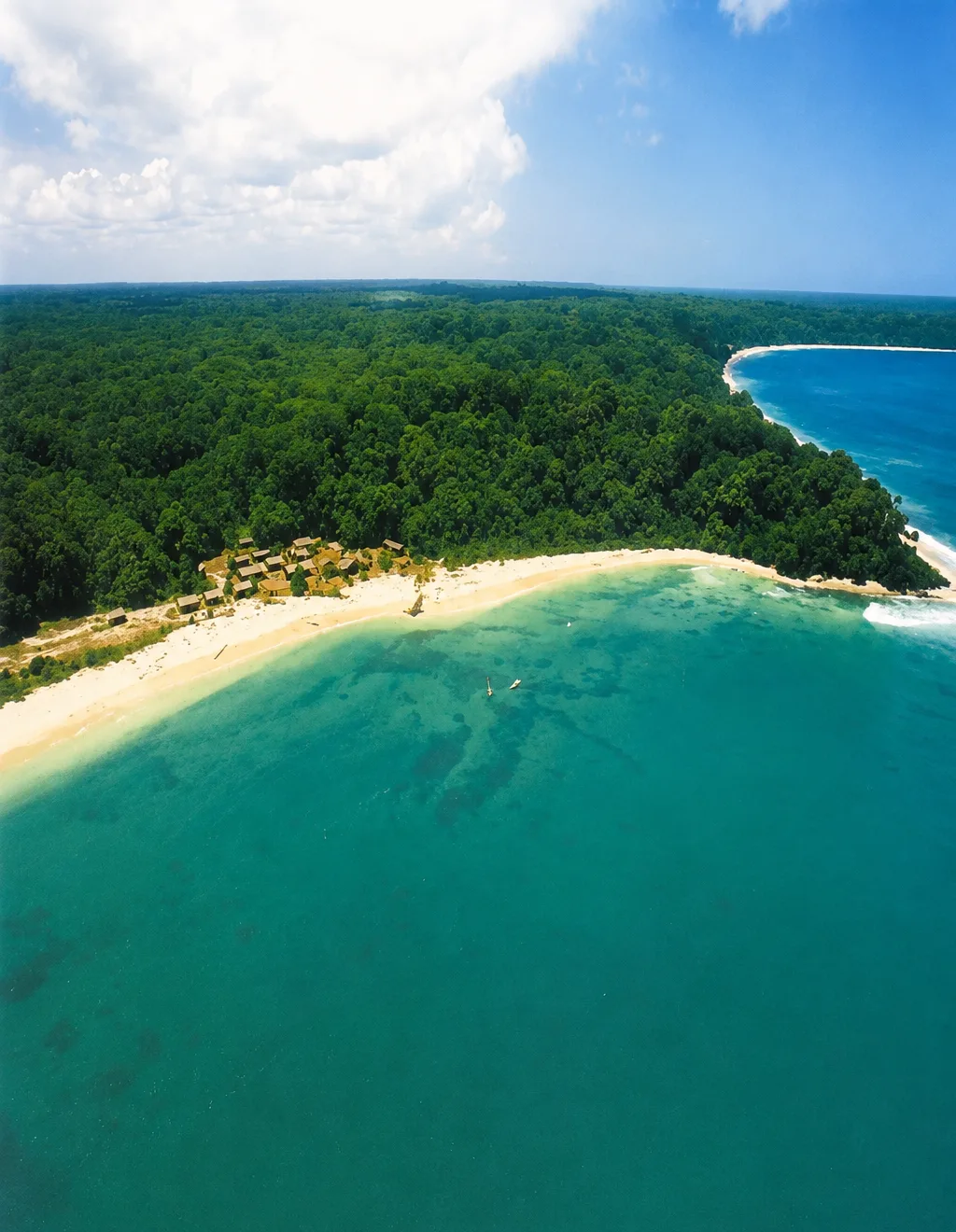
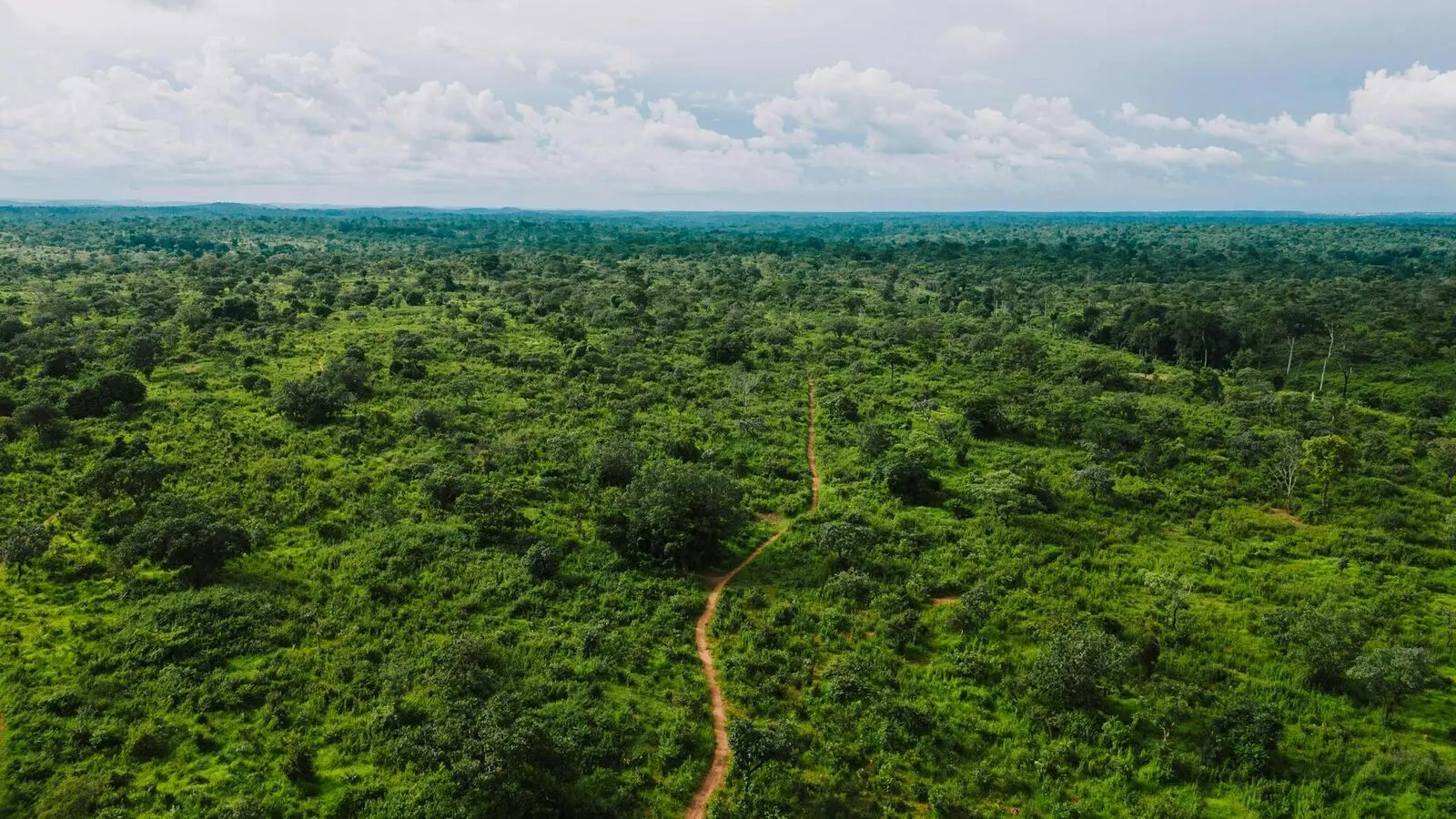
Thirteen national parks, created in 2002 by presidential decree. One of the richest pools of biodiversity in Africa. And a Tour du Gabon, in 2004, which surveyed the country's cultural potential over 5,400 km. Ebando was born of this land.
“A sanctuary! The forest!”
— Tatayo, at the close of the Tour du Gabon, February 2005
Gabon is the Central African country where, in 2002, President Omar Bongo proclaimed the creation of thirteen national parks covering 11% of the national territory, at the Earth Summit in Johannesburg. A historic decision. Gabon today has around 1.3 million inhabitants, on a surface area equivalent to half of France, of which 85% is still carpeted with tropical forest.
Since its founding in 1999, the Ebando association has built an ecotourism offering that is not a business but a way of supporting local actors: craftspeople, traditional practitioners, musicians, ecoguides. Everything is adjustable to availability, budget and motivation. From a single-day route to a ten-day expedition among the Babongo of the Bouvondo.
IOur offering
Hikes, excursions, expeditions.
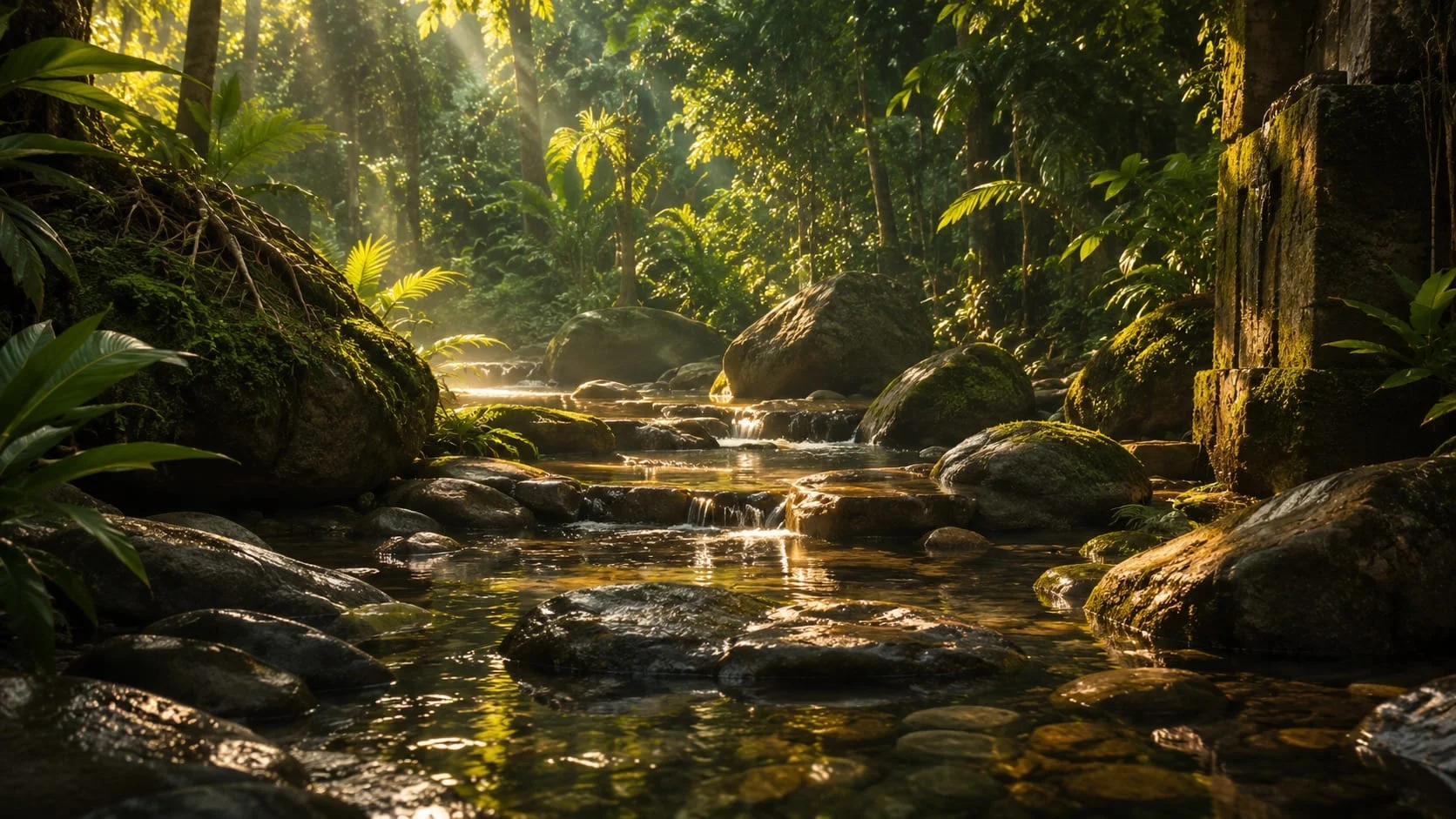
Water, pebbles, forest — the setting of Ebando's routes.Symbolic image
A walk in the Mondah forest (3-4 hours), an excursion into the Crystal Mountains, a day in the Estuary among the craftspeople and master initiators, a journey to Lambaréné, stays of several days in the Lopé park to observe mandrills, gorillas and elephants.
And the great expedition: seven to ten days among the Babongo of the Bouvondo massif, or among the Baka-Bibayak of Minkebe. Daily life, gathering, fishing, ritual life, encampment and dense forest.
All of this is arranged according to the time and budget available. Vigils and public rites (Mvett, Bwiti Dissumba or Missoko, Ombwiri) can be held in their natural setting.
Routes by region and by people
Three peoples, three forests.
The forest peoples of Gabon do not form a single people, and each region opens onto a different route. Depending on the territory visited, the encounter is with a distinct group, language, neighbouring hosts and ritual life of its own. Everything stays adjustable: from a single-day route to a multi-day expedition, listening to the elders and their community relays.
North · Fang country
Baka (Bibayak)
The Baka, also called Bibayak, of northern Gabon, in Fang country. Keepers of Edzengui, the dancing plant spirit that rises from the dense forest. Polyphonies, songs and dances, life in the encampment and the forest.
Centre · Tsogho / Massango country
Babongo
The Babongo of central Gabon, in the Chaillu-Bouvondo massif, in Tsogho and Massango country. This is where the great seven- to ten-day expedition takes place: gathering, fishing, daily life and ritual life in the heart of the dense forest.
East · Kota / Kwélé country
Bakoya
The Bakoya of the east of the country, around Mékambo, in Kota and Kwélé country. Here the encounter is prepared with the local community relays, in respect of the protocols and the elders.
To this are added natural parks, villages, savannas, primary forests and gallery forests, rivers, lakes, lagoons and ocean, sightings of animals and ritual vigils of every ethnic group. Direct contact always goes through the local associations, never without prior agreement.
A concrete example
A day in the Estuary.
To give a sense of the concrete, here is one of the single-day routes, a few kilometres from Libreville. As with everything at Ebando, it is composed à la carte, according to the departure time, the desire and the time available.
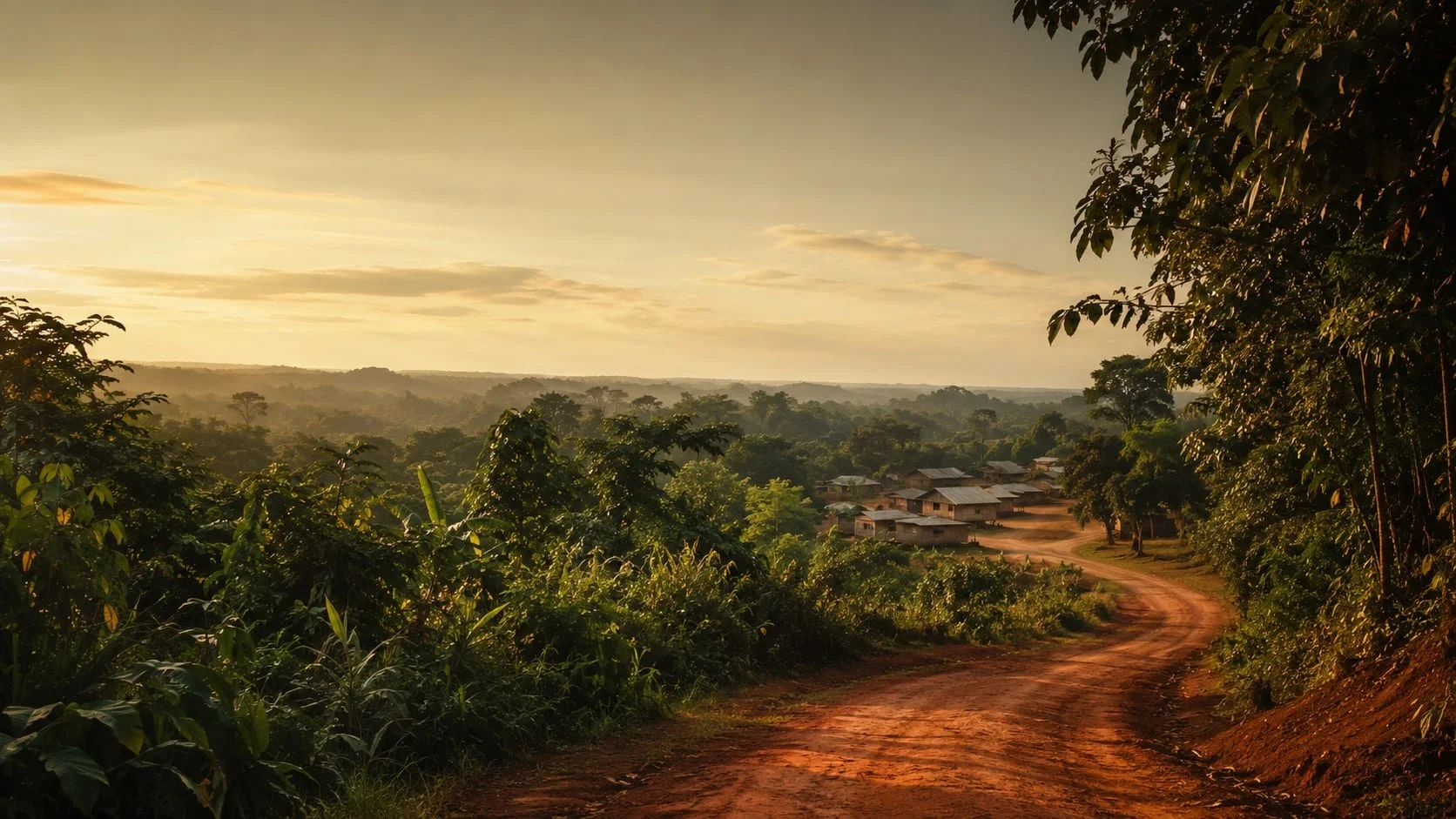
The red road of Donguila, many serene villages.Documentary image
Departure of your choosing in the morning, the road towards Ntoum by the old track, in several sections. You visit different craftspeople — sculptors, weavers, instrument-makers — or master initiators and traditional practitioners in their consecrated places.
The Donguila road for its characteristically Gabonese feel: red earth, many serene villages. Back towards Ntoum and a good restaurant, then the dense forest north of Kougouleu, its waterfall, a place of the spirits, and its mineral spring. Back towards Libreville, the sunset facing you along the way, and a grilled fresh fish in town.
Another variant, towards the east: a Fang village of the Bwiti tradition, an old sage who is a luthier, a musician-therapist, and his family. A high place. Evening meal in the village, return towards midnight or at first light, with the possibility of a simple vigil or a ritual all-nighter.
« Impossible is not Gabonese. »
The land
« One of the richest pools of biodiversity in Africa. »
From 9 August to 25 September 2004, fifteen people aboard three vehicles carried out a kind of inventory of Gabon's cultural potential. Initiated by the CNPN, funded, organised and carried out by WCS Gabon, supported by Ebando's musician-therapists and cultural mediators, with the active participation of Pierre-Claver Akendengué and Annie-Flore Batchiellilys.
The aim: to meet the villagers living near the thirteen national parks, the better to understand the rich bond between cultural wealth and biological wealth. Six weeks listening to the deep Gabon.
That biological wealth runs deep across its thirteen national parks: the forest elephants and humpback whales of Loango, the leatherback turtles that come to nest on its beaches, the great Langoué clearing (bai) at the heart of Ivindo, the mandrills and lowland gorillas of Lopé and Mikongo. A wildlife the villages met along the Tour have lived alongside forever.
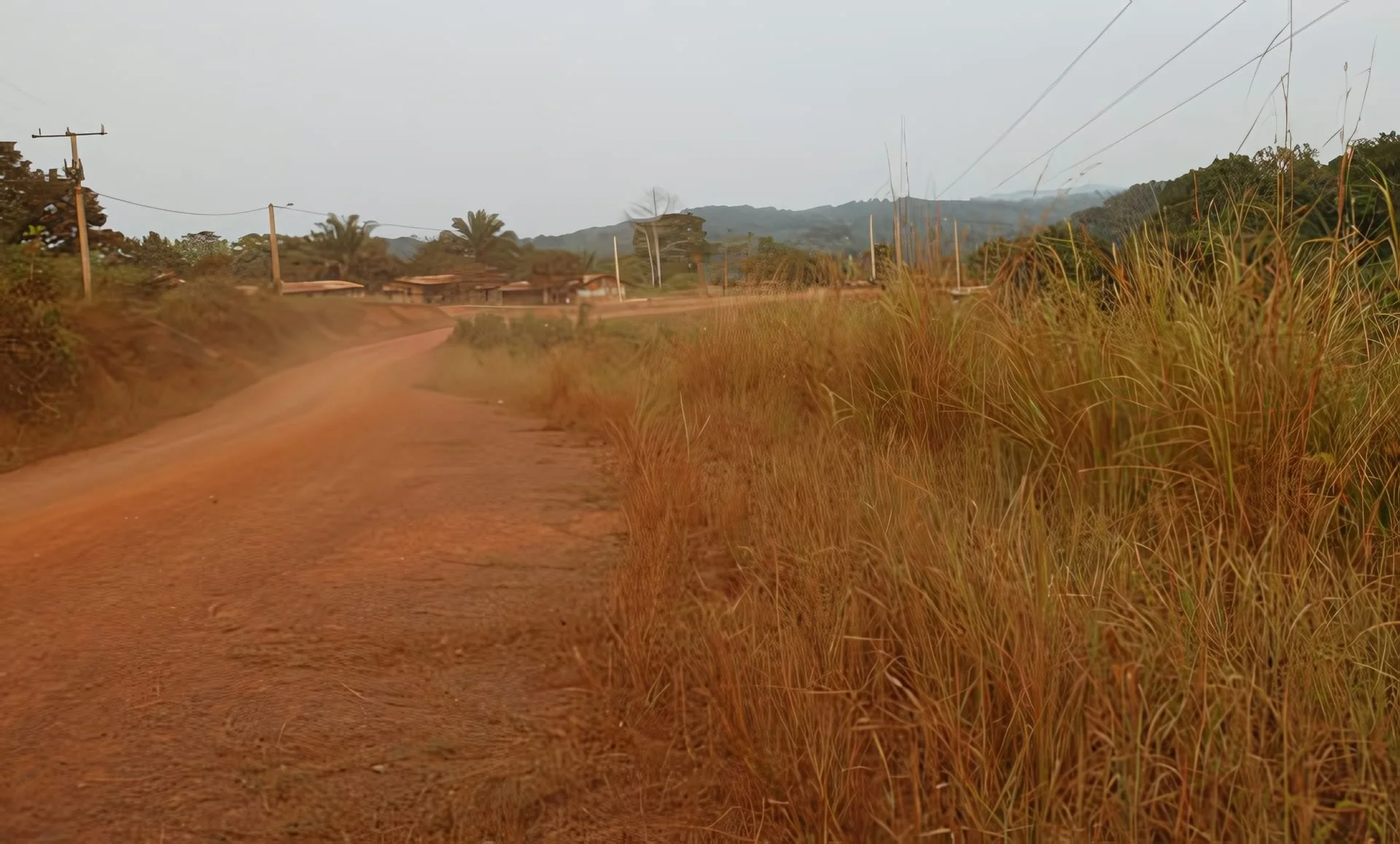
The laterite track, the red thread of the 5,400 kilometres.Ebando archive photo
Leg · Central Gabon
La Lopé, Koulamoutou
The melodious songs of the Okandé along the Ogooué, Akèlè Simba and Babongo villages at the edge of the forest of bees. Bwiti Missoko and Niembe in full expression.
Leg · Northern Gabon
Makokou, Mékambo, Minvoul
Public rites of the Mungala (Kota circumcision), songs of the Akola, polyphonies of the Baka-Bibayak. Edzengui rising from the dense forest, a dancing plant spirit.
Leg · Southern Gabon
Mayumba, Tchibanga
Bwiti Dissumba of the Vili: sober, harmonious, intense. A spontaneous free concert by Annie-Flore at the Tchibanga stadium. Planting of fruit trees in her native village.
Six weeks, thirteen parks
« Listening to the deep Gabon. »
The Last Dance · 2004
GABON – The Last Dance (2004), English version, born of the Tour of Gabon, directed by Josh Ponte and Duncan Bridgeman.
Testimony
Jean-Claude Cheyssial
Independent filmmaker
An independent documentary filmmaker. Accompanied by Tatayo in his discovery of the Bwiti in the 1990s-2000s. He publicly recommended the association's approach within the framework of Gabonese ecotourism.
Ebando's approach to the cultural and natural ecotourism of Gabon is serious, respectful of the traditions and the peoples, and open to the outside gaze without ever turning it into folklore.