
Project · Craft · Culture · Sacred fire
Opening a wrought-iron workshop that is, at the same time, a traditional forge. Creating several jobs — a craftsman and apprentices — for a skill on the verge of disappearing. And rebuilding, in Gabon, the Bwiti ritual objects that hundreds of temples are calling for.
The craftsman
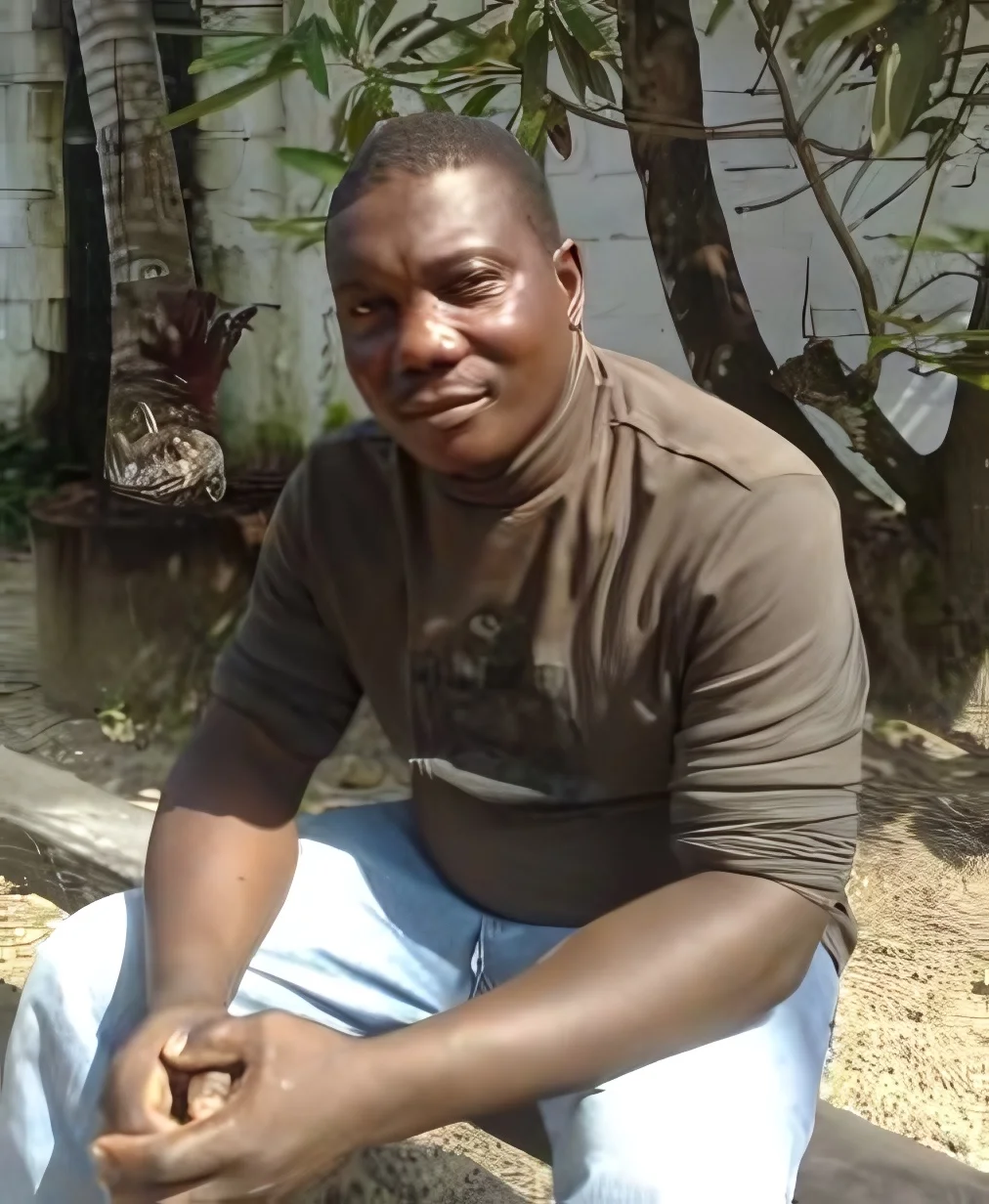
Alexis Madouma Moukagni, known as Moussossi, is a Gabonese craftsman of Massango origin, specialised in metalwork. A welder by training, he also works wrought iron. His collaboration with Tatayo began nearly twenty years ago, as the appointed mechanic for the vehicles of the transport company T.R.I.P., founded in 1984 by Tatayo.
In 2001, following the arrival of a sea spirit on Tatayo's path, the two of them reopened a forge for the first time in a long while. They gathered the traditional tools — bellows, anvil — and relit the sacred fire.
Why
Rebuilding what is being lost.
Opening a traditional forge means, first of all, being able to build again, in Gabon, the Bwiti ritual objects. The mayoko (dance bells, worn at the ankles and knees) are now made by just one craftsman, in Port-Gentil. The kendos (bells) and the throwing knives (Mouselé) are becoming hard to find. Yet Gabon has hundreds of temples, and many nganga (initiators) are looking for these objects.
This workshop would therefore answer a growing need in Libreville. It would, at the same time, be a wrought-iron workshop, which would ensure its longevity. It would give work to Moussossi and likely to two or three apprentices, and would help sustain traditional Gabonese culture.
Reopening · 2001
The fire relit, after years.
In 2001, Tatayo and Moussossi reopened a forge for the first time. Traditional tools gathered, bellows rebuilt, anvil set back in place: the old gesture resumed, there where mass foundry work had pushed it aside.
The idea is to make it a lasting workshop, serving the temple and the demand for ritual objects. Each mayoko, each kendo hammered out would extend a chain of craftsmen that was thought to be broken.
The gesture and the music
A forge is never alone.
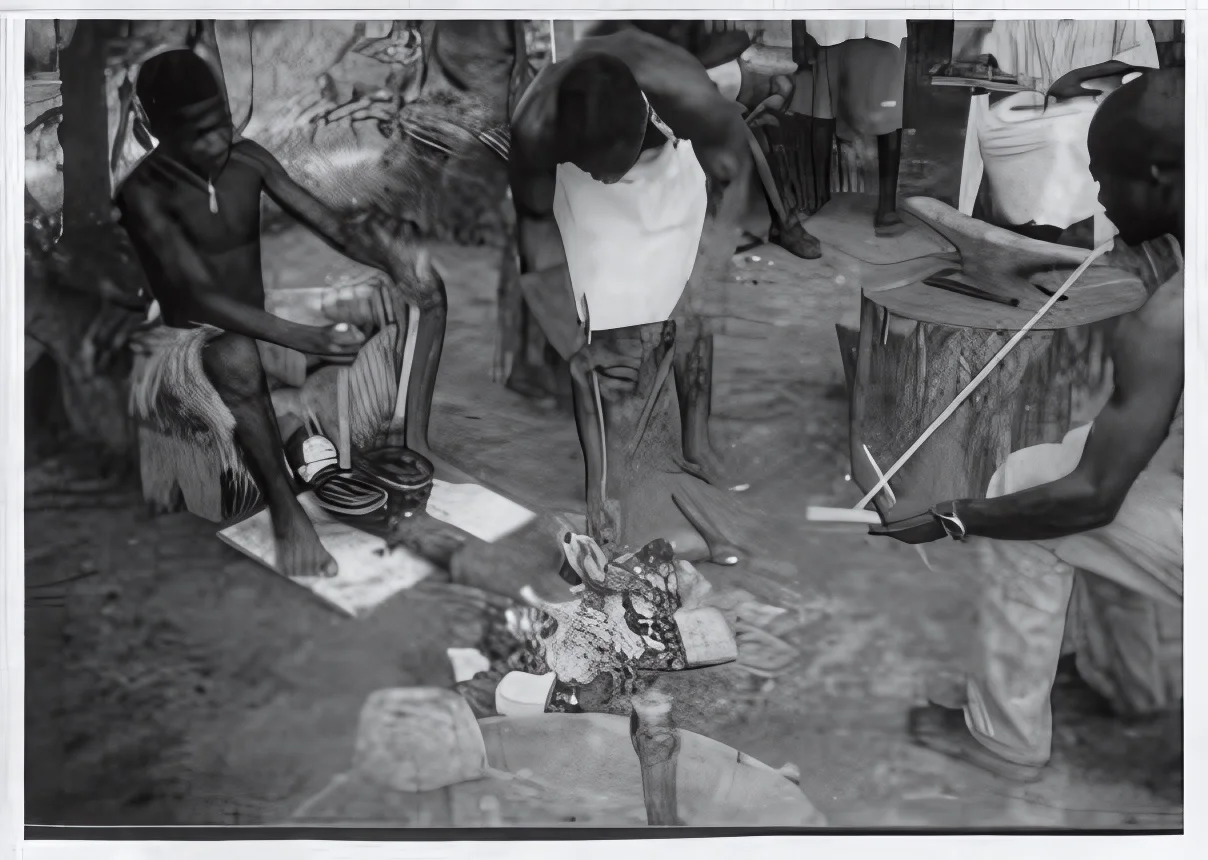
In the period photograph, the blacksmith is not isolated: at his side, the traditional bellows feed the embers, and the Moungongo player sets the rhythm of the work. Metalwork takes its place within a whole — the sound, the breath, the fire.
It is this whole that Ebando seeks to maintain: not one more machine, but a living workshop where the gesture is passed on.
Beyond the workshop
A symbolically cardinal activity.
Preserving the Bwiti cults is one way of keeping, at the same time, the « encyclopaedic » knowledge of the forest and its plants that the nganga of Gabon currently hold, not to mention the immense cultural heritage carried by the cults, dances and practices of the various Bwiti (Fang, Tsogho, Puvi, Apindi, forest peoples).
Rebuilding a forge is a way of showing support for the traditional culture of Gabon and of Central Africa.
The matter, the state of the project
From raw iron to ritual fire.
State of the project
The forge was reopened in 2001. The project aims to make the workshop lasting, to meet the temple's needs and the demand for ritual objects.
What the workshop produces
Mayoko (dance bells), kendos (bells), throwing knives (Mouselé) — the Bwiti ritual objects, and the everyday wrought iron that ensures the workshop's longevity.
Jobs envisaged
One craftsman, Moussossi, and likely two or three apprentices — a chain of transmission for a skill on the verge of disappearing.
To support is to keep the fire going
Support the forge.
If you would like to support the forge project — tools, apprentices, raw materials — write to Ebando. We will talk through the current needs.