
Advocacy · Academic document · 2002
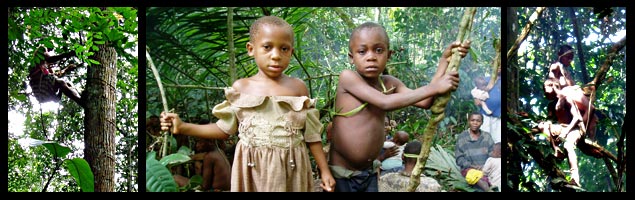
Position paper from the symposium on the Pygmies of Central Africa, at Omar Bongo University in Libreville, from 28 January to 2 February 2002. Ebando served as its logistical backbone.

A pioneering approach, opening access to their own perception of their way of life and their environment.
— Symposium position paper, Omar Bongo University, 2002
Context
The first peoples of Central Africa have long been the subjects of scientific work carried out over an extended period. Studies of analysis and synthesis that very rarely left room for an endogenous expression from the peoples themselves.
The originality of this symposium, organised by the LUTO with the contribution of Proculture and the French Cultural Centre, is twofold: to submit the state of research to a collective of representatives drawn from different regional sub-groups, and to let them express directly an endogenous vision of their society.
A voice that is fully endogenous.
The purpose of this approach is to support the building of projects that answer needs assessed not by outside bodies but by the cultures first concerned.
The aim is to place the first peoples within a relationship of reciprocal exchange of knowledge, so as to ensure better preservation, on the one hand of their cultural heritage and, on the other, of a knowledge of a natural heritage intimately tied to them and of which they are the customary owners.
With this in mind, the approach adopted for this symposium is to present, first, the state of the work in a given discipline and, second, to give the floor to the representatives of the first peoples so that they may offer their comments on this work, set out their perception of things and express their aspirations. From the topics addressed, their comments and suggestions, multi-year action programmes are then drawn up.
An endogenous vision
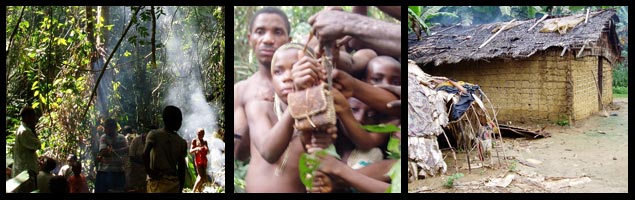
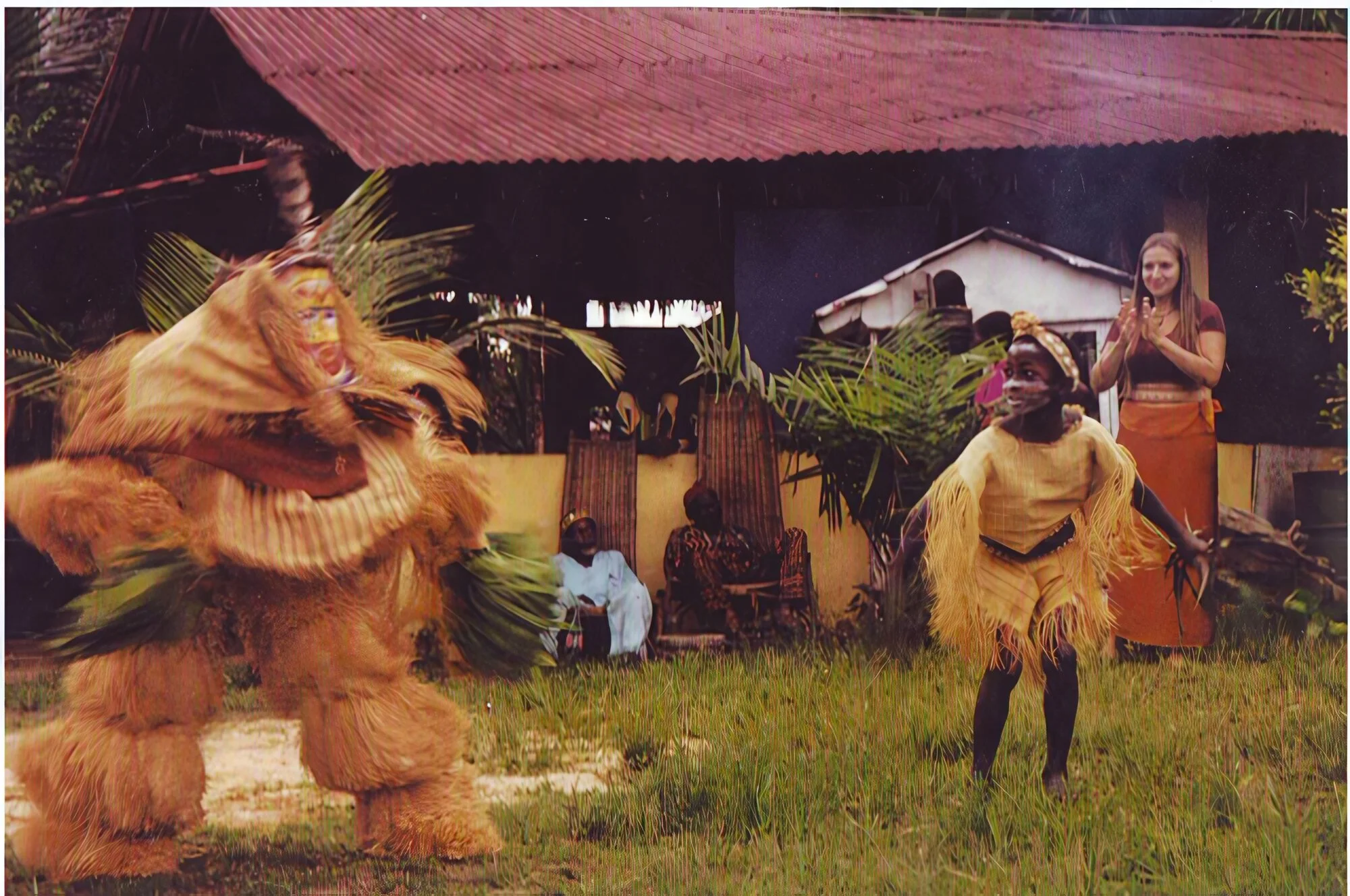
Opening access to their own perception of their way of life and their environment.
— The meaning of the symposium
Submit, listen, act.
Where research had long been content to observe, this symposium reverses the movement: it places those first concerned back at the centre. Not as objects of study, but as interlocutors and co-authors of the programmes that concern them.
From this reciprocal exchange come concrete deliverables: a documented heritage, languages preserved, a renewed cartography, multi-year action programmes. Knowledge ceases to be extracted and becomes shared.
Expected outputs
Six deliverables for the long term.
The symposium does not stop at speech: it turns it into lasting tools, serving the communities that nurtured them.
01
Databases
Ethnographic reference corpus
02
Dictionaries
Forest-peoples languages of Gabon
03
New cartography
Geographic distribution of the forest peoples in Gabon
04
Musical recordings
A living sound heritage
05
Films
Anthropological documentaries
06
Publication of proceedings
Collected contributions from the symposium
The spirit of the symposium